Letra
Cuenta atrás completa con la letra habitual (ampliación editorial, no una transcripción de la edición de 1931)
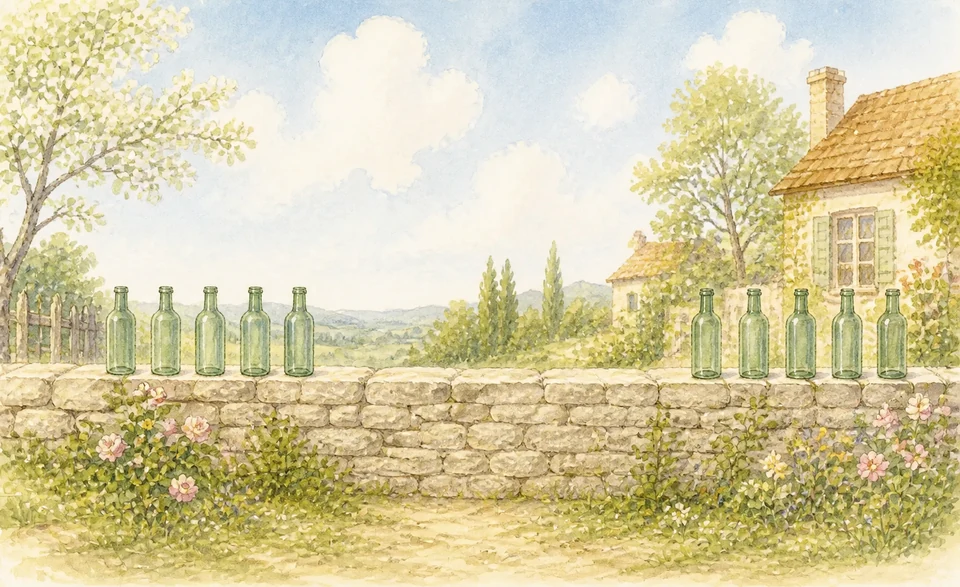
Ten green bottles standing on the wall, Ten green bottles standing on the wall, And if one green bottle should accidentally fall, There’d be nine green bottles standing on the wall. Nine green bottles standing on the wall, Nine green bottles standing on the wall, And if one green bottle should accidentally fall, There’d be eight green bottles standing on the wall. Eight green bottles standing on the wall, Eight green bottles standing on the wall, And if one green bottle should accidentally fall, There’d be seven green bottles standing on the wall. Seven green bottles standing on the wall, Seven green bottles standing on the wall, And if one green bottle should accidentally fall, There’d be six green bottles standing on the wall. Six green bottles standing on the wall, Six green bottles standing on the wall, And if one green bottle should accidentally fall, There’d be five green bottles standing on the wall. Five green bottles standing on the wall, Five green bottles standing on the wall, And if one green bottle should accidentally fall, There’d be four green bottles standing on the wall. Four green bottles standing on the wall, Four green bottles standing on the wall, And if one green bottle should accidentally fall, There’d be three green bottles standing on the wall. Three green bottles standing on the wall, Three green bottles standing on the wall, And if one green bottle should accidentally fall, There’d be two green bottles standing on the wall. Two green bottles standing on the wall, Two green bottles standing on the wall, And if one green bottle should accidentally fall, There’d be one green bottle standing on the wall. One green bottle standing on the wall, One green bottle standing on the wall, And if one green bottle should accidentally fall, There’d be no green bottle standing on the wall.
#Traducción al español
Había 10 botellas verdes sobre el muro, había 10 botellas verdes sobre el muro. Y si una botella verde se cayera por accidente, quedarían 9 botellas verdes sobre el muro. Había 9 botellas verdes sobre el muro, había 9 botellas verdes sobre el muro. Y si una botella verde se cayera por accidente, quedarían 8 botellas verdes sobre el muro. Había 8 botellas verdes sobre el muro, había 8 botellas verdes sobre el muro. Y si una botella verde se cayera por accidente, quedarían 7 botellas verdes sobre el muro. Había 7 botellas verdes sobre el muro, había 7 botellas verdes sobre el muro. Y si una botella verde se cayera por accidente, quedarían 6 botellas verdes sobre el muro. Había 6 botellas verdes sobre el muro, había 6 botellas verdes sobre el muro. Y si una botella verde se cayera por accidente, quedarían 5 botellas verdes sobre el muro. Había 5 botellas verdes sobre el muro, había 5 botellas verdes sobre el muro. Y si una botella verde se cayera por accidente, quedarían 4 botellas verdes sobre el muro. Había 4 botellas verdes sobre el muro, había 4 botellas verdes sobre el muro. Y si una botella verde se cayera por accidente, quedarían 3 botellas verdes sobre el muro. Había 3 botellas verdes sobre el muro, había 3 botellas verdes sobre el muro. Y si una botella verde se cayera por accidente, quedarían 2 botellas verdes sobre el muro. Había 2 botellas verdes sobre el muro, había 2 botellas verdes sobre el muro. Y si una botella verde se cayera por accidente, quedarían una botella verde sobre el muro. Había una botella verde sobre el muro, había una botella verde sobre el muro. Y si esa botella verde se cayera por accidente, no quedaría ninguna botella verde sobre el muro.
#Ten Green Bottles de un vistazo
- País de origen
- 🇬🇧 Reino Unido
- Se canta en
- inglés
- Letra de
- Tradicional
- Primera constancia
- Printed in The Oxford Song Book, Volume II (1931); separate Whittaker setting in 1935
- Edad recomendada
- 3–7
- Estado de ánimo
- para contar, educativa, tradicional
- Última actualización
- 27 de agosto de 2026
Cómo se canta
- Canten primero despacio para que se oigan bien las palabras inglesas y las repeticiones.
- Asocien un gesto sencillo a cada frase o número que se repite.
- En la siguiente vuelta, dejen que otro niño dirija los gestos.
Significado y origen
La canción cambia una sola cosa cada vez. Diez botellas están sobre un muro, una cae accidentalmente y la siguiente estrofa empieza con nueve. La misma frase lleva la cuenta hasta cero. Como historia y melodía permanecen estables, los niños pueden centrarse en el nuevo número y oír qué significa «una menos» en cada vuelta.
«Ten Green Bottles» aparece en el segundo volumen de The Oxford Song Book, que el catálogo del archivo sueco de música popular registra como publicado en Londres en 1931, con el verso inicial «There were ten green bottles hanging». La versión independiente de William Gillies Whittaker, descrita como canción tradicional de Yorkshire, se publicó en 1935. Son fechas de dos publicaciones, no dos orígenes. La fuente histórica ofrece un patrón repetido; esta página lo escribe de diez a cero con la redacción familiar «standing on the wall» y etiqueta el texto completo como ampliación editorial, no como transcripción de la edición de 1931.
Botellas de papel, bloques o fichas hacen visible la resta. Se empieza con diez, se retira una tras cada caída y se comprueba la cantidad antes de seguir. Las botellas de cristal reales no aportan nada al juego.
Preguntas frecuentes
- ¿Por qué se asocian tanto 1931 como 1935 con Ten Green Bottles?
- La canción aparece en The Oxford Song Book, Volume II, que el catálogo del archivo sueco de música popular fecha en 1931 (página 102, con el inicio «There were ten green bottles hanging»). La versión musical independiente de William Gillies Whittaker, descrita como una canción tradicional de Yorkshire, se publicó en 1935.
- ¿La cuenta atrás completa está impresa literalmente en la fuente histórica?
- La canción repite una estrofa reduciendo el número cada vez. Esta página etiqueta el texto completo de diez a cero como expansión editorial para distinguirlo del patrón repetitivo documentado en la fuente.