Lyrics
Full countdown in the familiar wording (editorial expansion, not a transcription of the 1931 print)
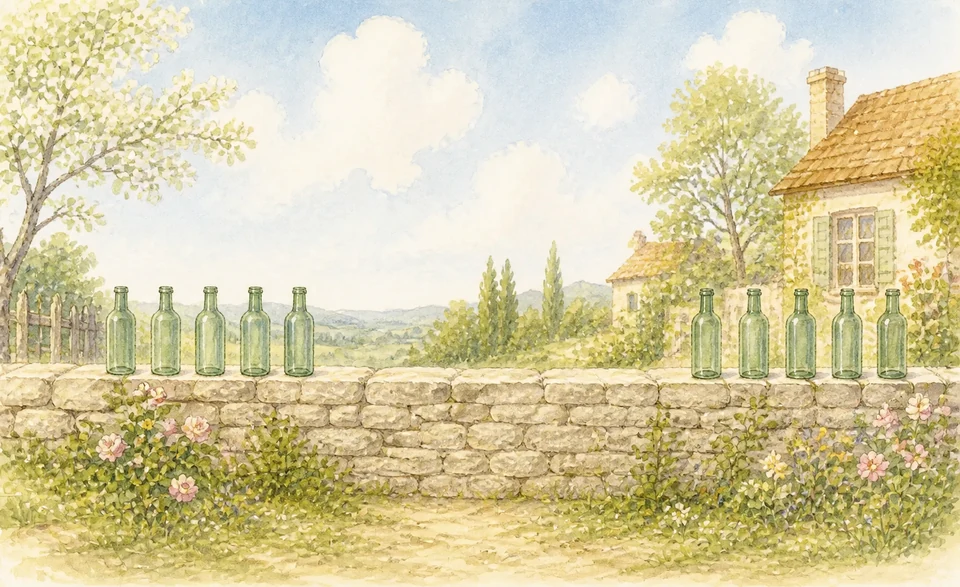
Ten green bottles standing on the wall, Ten green bottles standing on the wall, And if one green bottle should accidentally fall, There’d be nine green bottles standing on the wall. Nine green bottles standing on the wall, Nine green bottles standing on the wall, And if one green bottle should accidentally fall, There’d be eight green bottles standing on the wall. Eight green bottles standing on the wall, Eight green bottles standing on the wall, And if one green bottle should accidentally fall, There’d be seven green bottles standing on the wall. Seven green bottles standing on the wall, Seven green bottles standing on the wall, And if one green bottle should accidentally fall, There’d be six green bottles standing on the wall. Six green bottles standing on the wall, Six green bottles standing on the wall, And if one green bottle should accidentally fall, There’d be five green bottles standing on the wall. Five green bottles standing on the wall, Five green bottles standing on the wall, And if one green bottle should accidentally fall, There’d be four green bottles standing on the wall. Four green bottles standing on the wall, Four green bottles standing on the wall, And if one green bottle should accidentally fall, There’d be three green bottles standing on the wall. Three green bottles standing on the wall, Three green bottles standing on the wall, And if one green bottle should accidentally fall, There’d be two green bottles standing on the wall. Two green bottles standing on the wall, Two green bottles standing on the wall, And if one green bottle should accidentally fall, There’d be one green bottle standing on the wall. One green bottle standing on the wall, One green bottle standing on the wall, And if one green bottle should accidentally fall, There’d be no green bottle standing on the wall.
#Ten Green Bottles at a glance
- Country of origin
- 🇬🇧 United Kingdom
- Sung in
- English
- Words by
- Traditional
- First known
- Printed in The Oxford Song Book, Volume II (1931); separate Whittaker setting in 1935
- Best for ages
- 3–7
- Mood
- counting, educational, traditional
- Last updated
- 27 August 2026
How to sing it
- Begin slowly so everyone can hear the repeated words and the action cue.
- Use ten paper bottle shapes or counters, remove one after every fall, and show empty hands at zero.
- Repeat the song once and invite a different child to lead the cues.
Meaning and origin
The song changes one thing at a time. Ten bottles stand on a wall, one accidentally falls, and the next verse begins with nine. The same sentence then carries the count downward until none remain. Because the story and melody stay stable, children can focus on the changing number and hear what “one fewer” does at every step.
“Ten Green Bottles” appears in The Oxford Song Book, Volume II, which the Swedish folk music archive catalogues as published in London in 1931, with the opening line “There were ten green bottles hanging”. William Gillies Whittaker’s separate setting, described as a traditional Yorkshire song, was published in 1935. The two dates refer to different publications, not competing claims that the song began twice. The historical source gives a repeating song pattern; this page writes the count all the way from ten to zero in the familiar “standing on the wall” wording and labels that usable full text as an editorial expansion rather than a transcription of the 1931 print.
Paper bottle shapes, blocks or counters make the subtraction visible. Begin with ten, remove one after every fall and check the new total before the next verse. Real glass bottles and a real wall add no value to the activity: light counters provide the same pattern safely, and empty hands make the arrival at zero unmistakable.
Common questions
- Why are both 1931 and 1935 associated with Ten Green Bottles?
- The song appears in The Oxford Song Book, Volume II, which the Swedish folk music archive’s catalogue dates to 1931 (page 102, opening “There were ten green bottles hanging”). William Gillies Whittaker’s separate setting, described as a traditional Yorkshire song, was published in 1935.
- Is the full countdown printed exactly in the historical source?
- The song works by repeating one stanza with a number reduced each time. This page labels the complete ten-to-zero text as an editorial expansion so readers can distinguish the usable full countdown from the sourced repeating pattern.