Lyrics
Il testo completo di «Stella, Stellina» con traduzione in inglese.
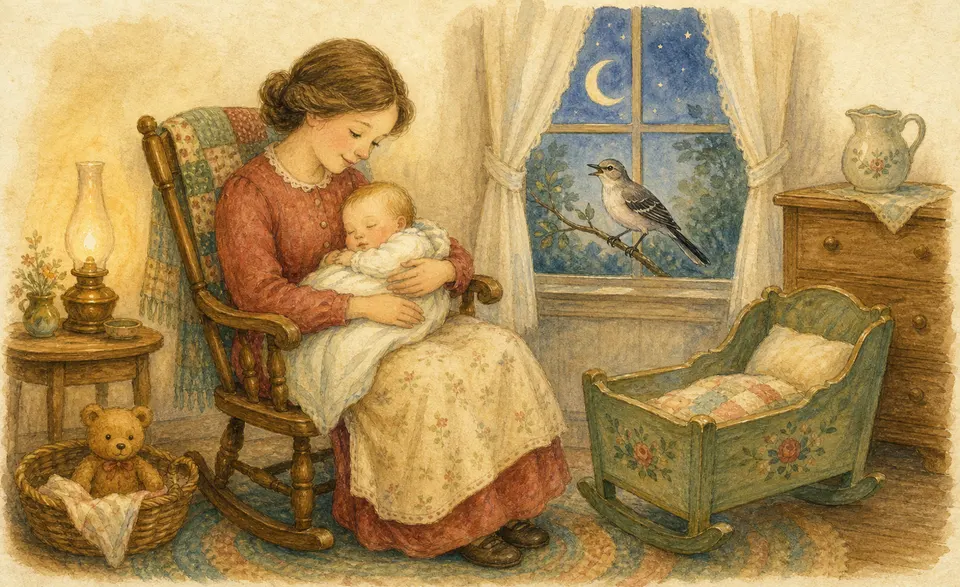
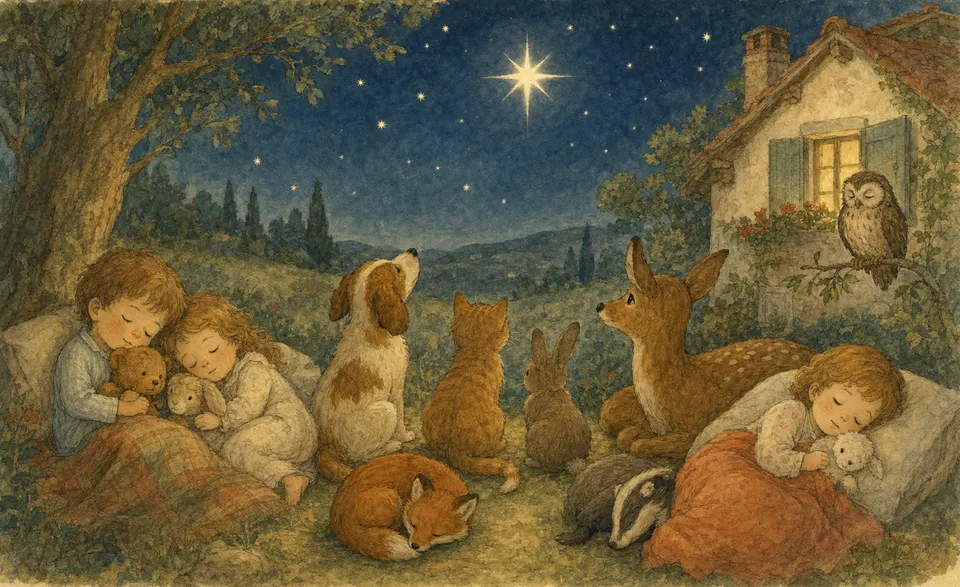
Stella, stellina, la notte si avvicina; la fiamma traballa, la mucca è nella stalla. La mucca e il vitello, la pecora e l'agnello, la chioccia coi pulcini, la mamma coi bambini. Tutti fanno la nanna nella braccia della mamma.
#English translation
Star, little star, the night is drawing near; the flame flickers, the cow is in the barn. The cow and the calf, the sheep and the lamb, the hen with her chicks, the mother with her children. They all go to sleep in their mother's arms.
#Stella, Stellina at a glance
- Country of origin
- 🇮🇹 Italy
- Sung in
- Italian
- Words by
- Lina Schwarz
- First known
- published 1920 in Lina Schwarz’s collection "Ancora… e poi basta!"
- Best for ages
- 2–7
- Mood
- lullaby
- Last updated
- 27 August 2026
Meaning and origin
This is one of Italy’s best-loved lullabies, and its method is simply to gather everything in for the night. As darkness comes and the lamp-flame wavers, the song moves calmly through the farm — the cow with her calf, the sheep with her lamb, the hen with her chicks — until it arrives where it was always heading: the mother with her children, all of them falling asleep in her arms. Each pairing is a small promise that no one is left out in the dark.
It has an author: Lina Schwarz (Verona 1876 – Arcisate 1947), poet and translator, who asked to be remembered on her gravestone as zia Lina, “Auntie Lina”. She published the poem in 1920 in her collection Ancora… e poi basta!; it was later set to music in many versions, and her verses often appeared without her name in school textbooks and anthologies — so the lullaby is far better known than she is. Its gift is its logic: if the calf, the lamb and the chick are all safe beside their mothers, then so, the child concludes, am I.
Common questions
- What does "Stella, stellina" say?
- As the night draws near and the lamp-flame flickers, everything is going to rest: the cow is in the barn with her calf, the sheep with her lamb, the hen with her chicks — and the mother with her children, who all fall asleep in her arms. It gathers the whole farmyard into one image of safety and sleep.
- Who wrote "Stella, Stellina"?
- The Italian poet and translator Lina Schwarz (Verona 1876 – Arcisate 1947), who asked to be remembered on her gravestone as "zia Lina", Auntie Lina. She published the poem in 1920 in her collection "Ancora… e poi basta!"; many of her verses circulated without her name in school textbooks, which is why the lullaby is so often taken for a traditional song.
- Why is "Stella, Stellina" so well known?
- Because it became one of Italy's classic lullabies, set to music in many versions and printed in school anthologies, often without its author's name. Its rocking rhythm and warm, rural images make it a natural cradle song.