Lyrics
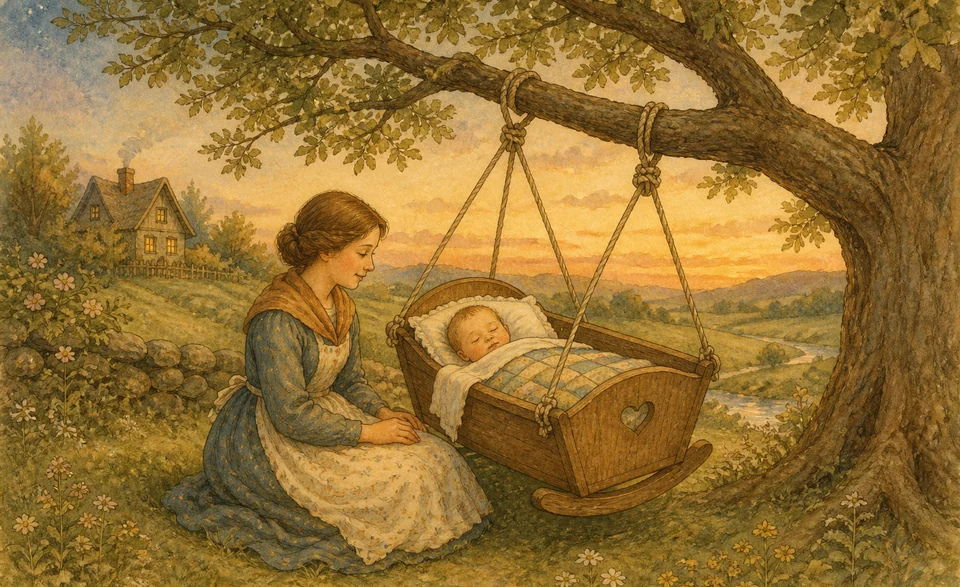
Rock-a-bye, baby, on the tree top, When the wind blows the cradle will rock; When the bough breaks the cradle will fall, And down will come baby, cradle and all.
#Rock-a-bye Baby at a glance
- Country of origin
- 🇬🇧 United Kingdom
- Sung in
- English
- Words by
- Traditional
- First known
- c. 1765 (words); 1886 (Canning melody, published by Chas. D. Blake; 1887 copyright-deposit edition)
- Best for ages
- 0–6
- Mood
- lullaby, bedtime, traditional
- Last updated
- 23 August 2026
How to sing it
- Rock a baby or sway gently from side to side through the first three lines.
- Slow down rather than dropping your hands on the last line; the tune works best as a quiet, even lullaby.
Meaning and origin
Words recognizable as “Rock-a-bye Baby” appeared in Mother Goose’s Melody around 1765. The four-line refrain printed here is the form most families now know, but its striking tree-top cradle has inspired more explanations than the evidence can support.
The familiar melody arrived much later. The Library of Congress identifies Effie I. Canning as its composer and reports publication in 1886; its collection preserves an 1887 copyright-deposit edition. Canning’s sheet music surrounds the refrain with additional verses, while oral singing usually keeps only these four lines.
Despite the falling bough, the tune is musically gentle. Keeping the pulse slow and lowering the voice on the last line turns the alarming image into the predictable ending of a cradle song.
Common questions
- Who wrote “Rock-a-bye Baby”?
- Nobody knows who wrote the words: they circulated long before the familiar tune, and the Library of Congress traces them to Mother Goose’s Melody, printed by John Newbery around 1765. Effie I. Canning composed the melody associated with the song in the 1880s; the Library of Congress holds an 1887 copyright-deposit copy.
- Is the cradle supposed to fall?
- The lyric ends with a fall, but singers commonly soften the action by lowering their arms slowly. Historical explanations for the image are speculative rather than established.