Lyrics
Celotno besedilo pesmi »Mojster Jaka« z angleškim prevodom.
Mojster Jaka, mojster Jaka, al' že spiš, al' že spiš? Al' ne slišiš zvona? Al' ne slišiš zvona? Bim, bam, bom. Bim, bam, bom.
#English translation
Master Jaka, Master Jaka, are you asleep? Are you asleep? Don't you hear the bell? Don't you hear the bell? Bim, bam, bom. Bim, bam, bom.
#Mojster Jaka at a glance
- Country of origin
- 🇫🇷 France
- Sung in
- Slovenian
- Version of
- Frère Jacques
- Words by
- Traditional
- First known
- Slovenian words undated; the French original is from c. 1780
- Best for ages
- 2–8
- Mood
- playful, traditional
- Last updated
- 26 August 2026
How to sing it
- Teach everyone the whole tune first — four short phrases, each sung twice.
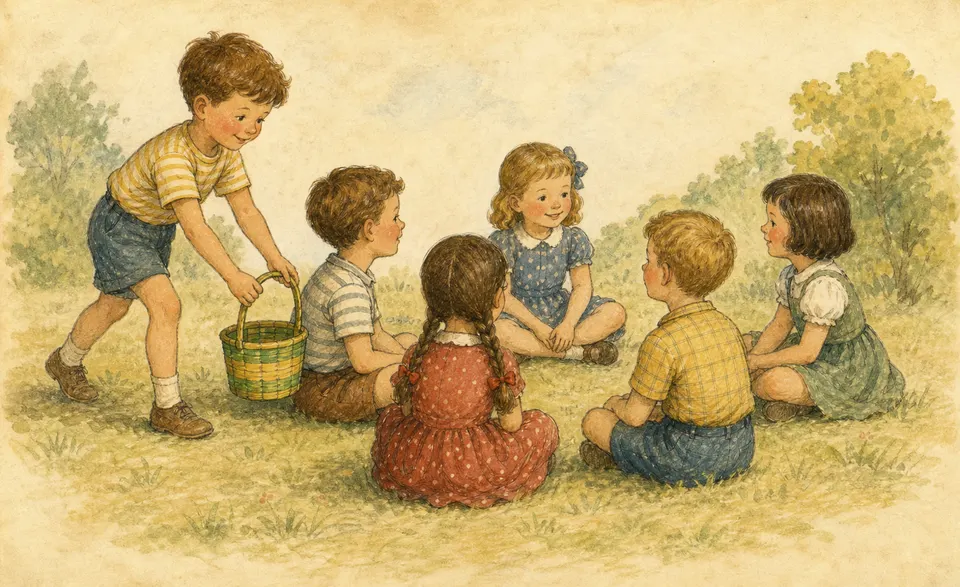
- Split into two groups. The first starts; the second waits until the first reaches "al' že spiš?" and then begins from the top.
- Ring an imaginary bell on "bim, bam, bom" — it keeps every group in time.
- Agree a finish before you start, or it never ends — usually each group stops after singing the whole song twice.
Meaning and origin
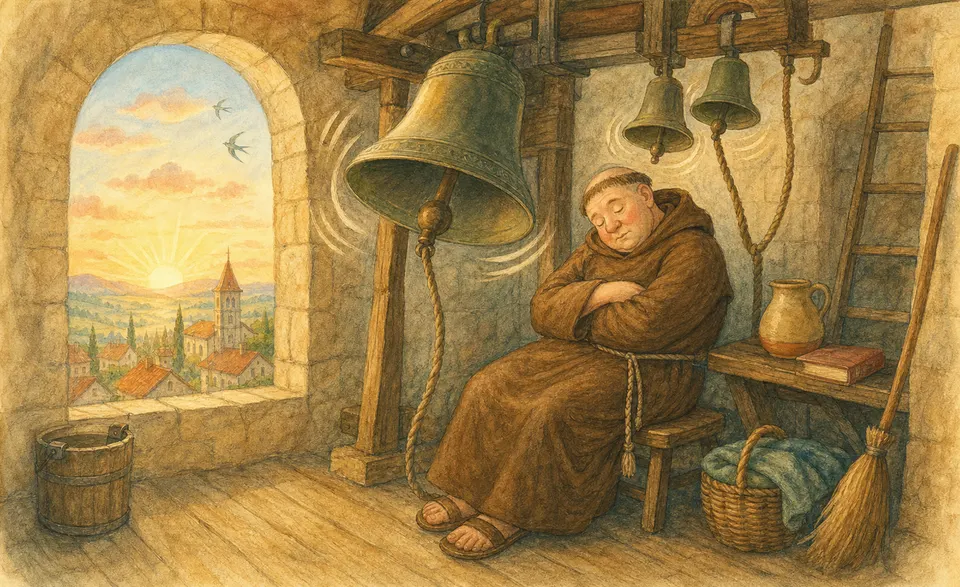
Slovenian children sing the sleepy friar of Frère Jacques too — but in Slovenian he is not a friar at all. Mojster is a master craftsman, and Jaka is the plain, everyday short form of Jakob. The name survived the journey from French; the monastery did not. What is left is a workman who has slept through the bell that was supposed to get him up, and a singer standing at his door asking, twice, whether he can really not hear it.
The words are a close cousin of the French, phrase for phrase. Al’ že spiš? answers Dormez-vous?; Al’ ne slišiš zvona? stands in for Sonnez les matines! — though the Slovenian version stops short of telling him to ring the bell himself, it only asks whether he hears it. And the bell itself has changed its voice: the French ding, ding, dong has become bim, bam, bom, which is how bells sound in Slovenian. A small detail, but it is the kind of thing that makes a translated song feel native rather than borrowed.
Nobody is credited with the Slovenian words, and none of the sources checked for this page say when they were written. That is not unusual for a version of a song whose French original has no securely established author either, first found in a manuscript of around 1780. The one thing that is certain is that the tune arrived intact, and with it the tune’s best trick: because all four phrases share one harmony, the song can be sung as a canon, each new group starting as the previous one reaches al’ že spiš? A primary school in Velenje picked it for an international project precisely because the same song exists in Slovenian, English and French — three classrooms, one round.
Common questions
- What does Mojster Jaka mean?
- "Master Jaka". A mojster is a master craftsman, and Jaka is the everyday Slovenian short form of Jakob — the same name as the French Jacques. So the Slovenian words keep the name but change the man: the friar of "Frère Jacques" has become a tradesman who has overslept, and the matins bell has become simply "the bell".
- Is Mojster Jaka the same song as Frère Jacques?
- Yes. It is the Slovenian version of the French round "Frère Jacques" — the same tune, the same four phrases and the same joke about someone who sleeps through the bell. Who wrote the Slovenian words, and when, is not recorded in the sources checked for this page.
- Is it "al' že spiš" or "al' še spiš"?
- Both are sung. "Al' že spiš?" asks "are you asleep already?", "al' še spiš?" asks "are you still asleep?" — printed collections differ, and either fits the tune. The version given here follows the form printed by Mama Lisa's World.
- Can Mojster Jaka be sung as a round?
- Yes, exactly like the French original. All four phrases sit over the same harmony, so a second group can start from the beginning when the first reaches "al' že spiš?", and a third and fourth can follow at the same distance.