Lyrics
Les paroles complètes de « Frère Jacques » avec traduction en anglais.
Frère Jacques, Frère Jacques, Dormez-vous? Dormez-vous? Sonnez les matines! Sonnez les matines! Ding, ding, dong. Ding, ding, dong.
#English translation
English singing version
Are you sleeping, are you sleeping, Brother John? Brother John? Morning bells are ringing! Morning bells are ringing! Ding, ding, dong. Ding, ding, dong.
#Frère Jacques at a glance
- Country of origin
- 🇫🇷 France
- Sung in
- French
- Also sung as
- Are You Sleeping, Brother John?, Mojster Jaka
- Words by
- Traditional
- First known
- c. 1780
- Best for ages
- 2–8
- Mood
- playful, traditional
- Last updated
- 24 July 2026
How to sing it
- Teach everyone the whole tune first — it is only four short phrases and repeats twice.
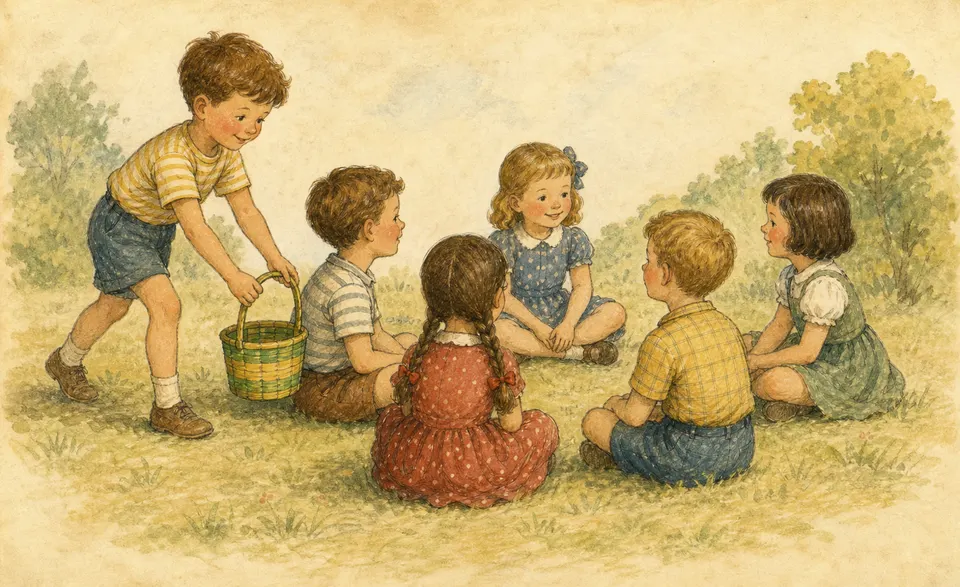
- Split into two groups. The first group starts; the second waits until the first reaches "Dormez-vous?" and then begins from the top.
- Keep going round; with confident singers you can run three or four groups at two-bar intervals.
- Agree a finish before you start, or it never ends — usually each group stops after singing the whole song twice.
Meaning and origin
This is the song most children meet first when they learn that two people can sing different things at the same time and it can still sound good. It is a round: everyone sings the same four phrases, and the groups simply start at different moments.
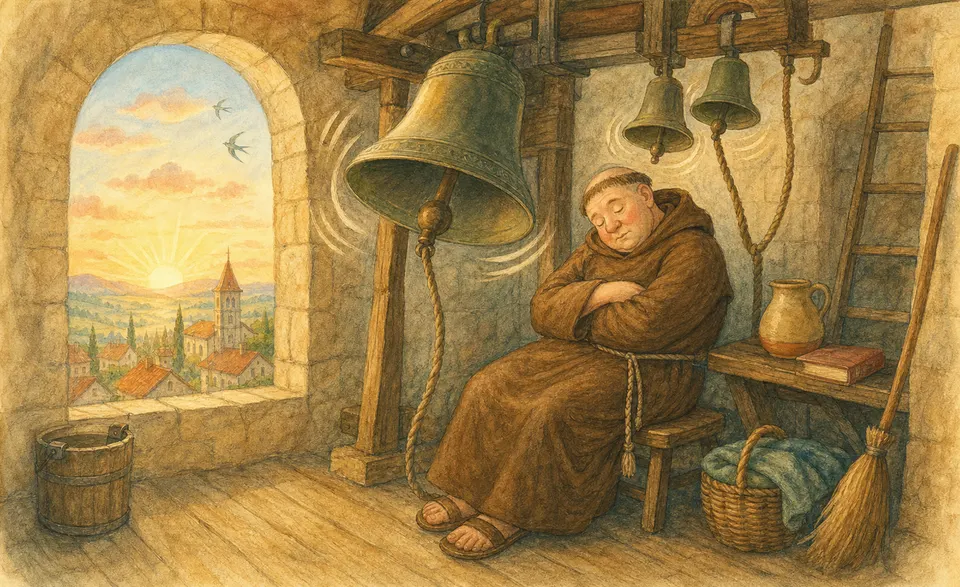
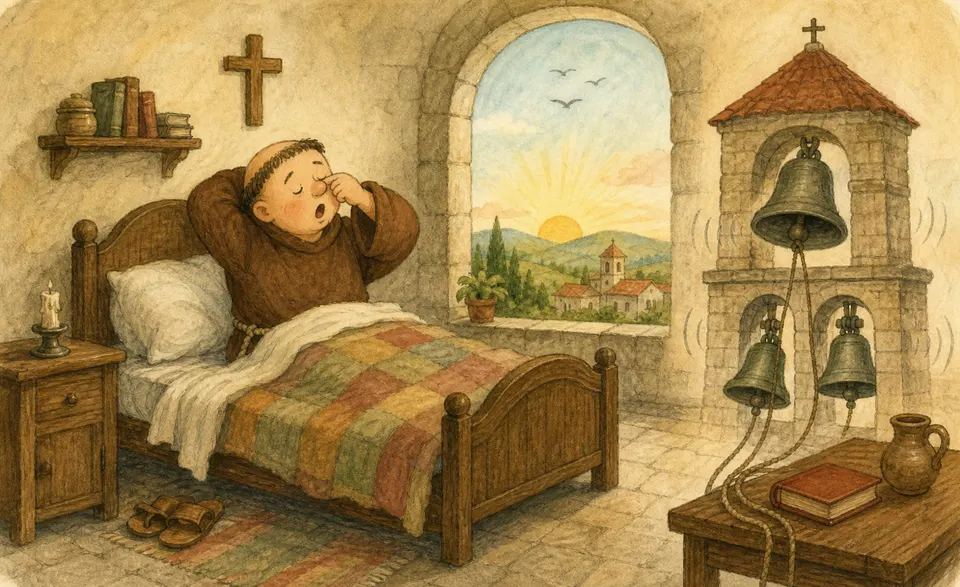
The joke is small and complete. Brother Jacques has slept through his one job. Somewhere in the monastery, matins is due, the bell has not been rung, and the singer is standing outside his door asking, with what one imagines is increasing pointedness, whether he is still asleep. Then the singer rings the bell themselves: ding, ding, dong. Four lines, one gently exasperated scene.
Who wrote it is not securely established. The earliest known version is in a French manuscript from around 1780, and the tune was first published in 1811; for a long time the song was simply treated as anonymous. In 2014 the musicologist Sylvie Bouissou put a name to it: in a manuscript of 86 canons at the Bibliothèque nationale de France, the collector Jacques Joseph Marie Decroix notes Jean-Philippe Rameau as the author of “Frère Jacques”, and the violinist Louis-Joseph Francœur’s 1772 Diapason général de tous les instruments à vent mentions Rameau and four canons, one of them this song. Bouissou treats these clues as proof; the words in that early version, she notes, differ from the ones sung today. The attribution has not been generally adopted, so the fairest statement is that there is evidence pointing to Rameau, and no author’s name on the song as most people know it.
It has travelled widely, usually with the sleeping friar intact — he is Bruder Jakob in German and Fra Martino in Italian, and in the English version he becomes Brother John, whose name fits the tune better than Jacques does.
Sung as a round, the tune keeps fitting against itself. Start a second group two bars behind the first and nothing clashes; start a third and a fourth and the texture just gets thicker. For a child, this is a genuinely startling discovery — that you can hold your own line while someone beside you sings something else, and that the two together make something neither of you could make alone.
Common questions
- What does Frère Jacques mean in English?
- It means "Brother Jacques" — a friar or monk. The song asks whether he is still asleep and tells him to ring the morning bells, so a fair prose translation is: "Brother Jacques, are you sleeping? Ring the morning bells! Ding, ding, dong."
- Who wrote Frère Jacques?
- No author is securely established, and the song was long treated as anonymous. Its earliest known appearance is in a French manuscript of around 1780, and the tune was first published in 1811. In 2014 the musicologist Sylvie Bouissou argued that Jean-Philippe Rameau wrote it: a manuscript of 86 canons at the Bibliothèque nationale de France, kept by the collector Jacques Joseph Marie Decroix, names Rameau as its author, and Louis-Joseph Francœur's 1772 "Diapason général" mentions Rameau and four canons, one of them "Frère Jacques". That is evidence for the attribution, not a settled fact; the song is still usually listed without an author.
- Why is Frère Jacques sung as a round?
- A round is a song in which everyone sings the same melody but starts at different times. "Frère Jacques" is only four short phrases, each sung twice, so a second group can begin when the first reaches "Dormez-vous?" and the two lines fit together; with confident singers it is sung in up to four parts. That is why it is so often a child's first experience of singing in parts.
- What are "les matines"?
- Matins is the first prayer service of the monastic day, held very early in the morning. Ringing the bell to wake the community for matins would have been someone's job — and in this song, Brother Jacques has slept through it.
- Is Brother John a real person?
- There is no evidence for one. Several theories have been proposed over the years, none of them convincing. The likeliest explanation is the dullest: "Jacques" is simply a very common French name, standing in for any monk at all.