Lyrics
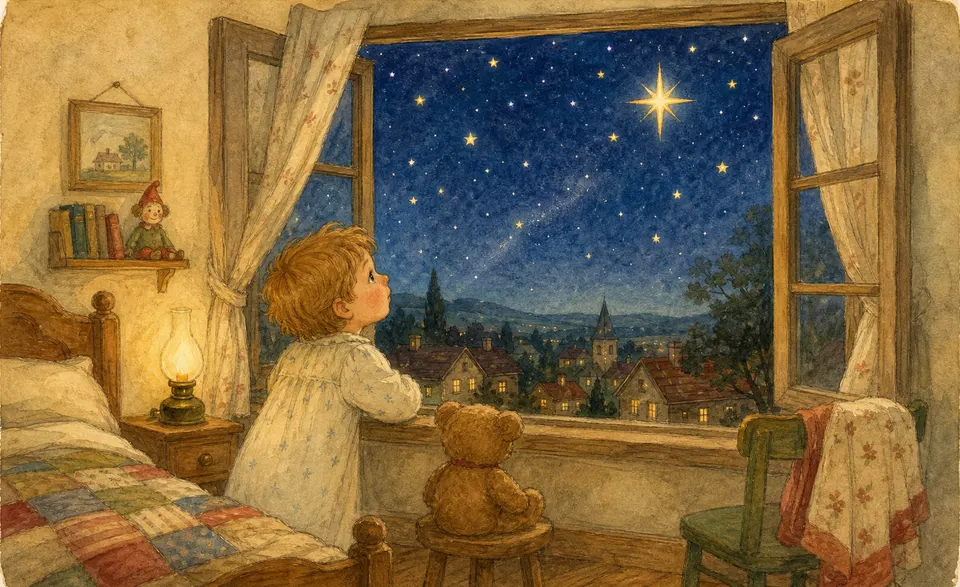
Twinkle, twinkle, little star, How I wonder what you are! Up above the world so high, Like a diamond in the sky.
#When the blazing sun is gone, When he nothing shines upon, Then you show your little light, Twinkle, twinkle, all the night.
#Twinkle, Twinkle, Little Star at a glance
- Country of origin
- 🇬🇧 United Kingdom
- Sung in
- English
- Words by
- Jane Taylor
- First known
- 1806
- Best for ages
- 1–6
- Mood
- lullaby, bedtime
- Last updated
- 24 July 2026
How to sing it
- Sit somewhere you can see a window, and sing the first verse slowly — about one word per second is plenty.
- Open and close your hands on each "twinkle" to make the stars flicker.
- On "up above the world so high", lift both hands slowly overhead and hold them there.
- Sing the last line quieter than the one before it, and the song puts itself to bed.
Meaning and origin
Almost every English-speaking child learns this song, and almost nobody learns it as what it is: a short Romantic poem about not knowing something. Jane Taylor’s verse asks a question — how I wonder what you are — and never answers it. That small act of wondering is the whole song.
Taylor published the poem in 1806, in a book she wrote with her sister Ann called Rhymes for the Nursery. It ran to five verses, following the star through the night: it appears when the sun goes, it lights the traveller in the dark, it peeps through the curtains at a sleeping child, and it keeps shining until the sun returns. The version sung today is almost always just the opening four lines, sometimes with the second verse added.
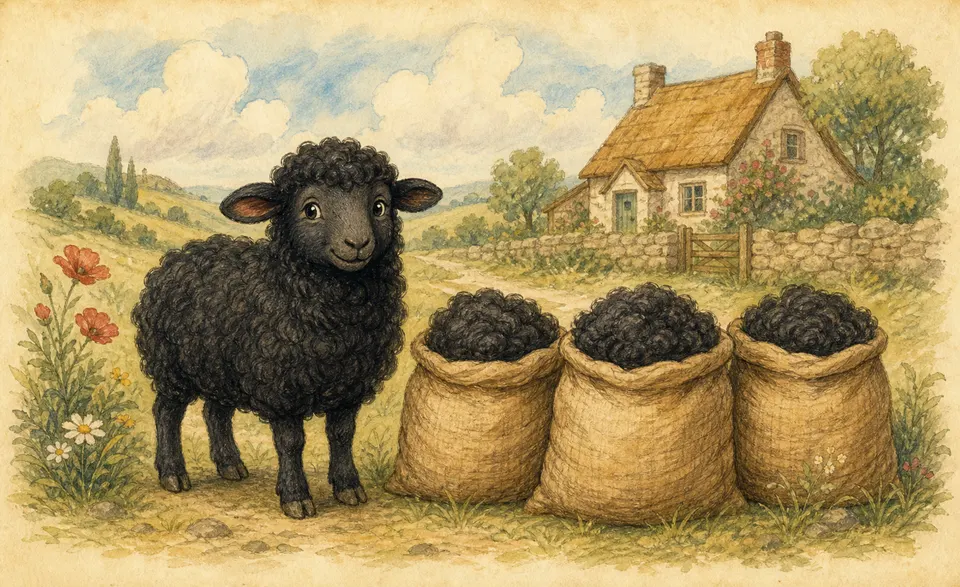
The tune came from somewhere else entirely. “Ah! vous dirai-je, maman” was printed in France in 1761 as a simple air, and it turned out to be one of the most portable melodies ever written — Mozart wrote twelve piano variations on it in 1781–82, and in English it carries the alphabet song and “Baa, Baa, Black Sheep” as well. Words and tune were only married up in 1838, in The Singing Master, which is why the poem scans so neatly against a melody its author never heard in connection with it.
It works as a lullaby for a practical reason. The melody moves in steady, even steps with no leaps to catch the voice, the rhyme scheme is flatly predictable, and the subject is fixed in one place in the sky. A child can follow it half-asleep, and an adult can sing it while thinking about something else entirely — which, at the end of a long day, is most of the point.
Common questions
- Who wrote Twinkle, Twinkle, Little Star?
- The words come from a poem called "The Star" by the English writer Jane Taylor, published in 1806 in Rhymes for the Nursery, a collection she produced with her sister Ann. The tune is older and unrelated: it is the French melody "Ah! vous dirai-je, maman", first printed in 1761.
- Is Twinkle, Twinkle the same tune as the ABC song?
- Yes. "Twinkle, Twinkle, Little Star", the alphabet song and "Baa, Baa, Black Sheep" all use the same French melody, which is why children often slide from one into another without noticing.
- How many verses does Twinkle, Twinkle, Little Star have?
- Jane Taylor's original poem has five verses, though almost everybody sings only the first. The second verse, in which the star appears once the sun has gone, is the one most often added at bedtime.
- Did Mozart write Twinkle, Twinkle, Little Star?
- No, though the confusion is understandable. Mozart wrote twelve piano variations on the same French tune (K. 265) — once dated to his 1778 stay in Paris, now placed in 1781–82 on the evidence of his manuscript — about twenty years after the melody was first published in 1761 and long before Jane Taylor wrote the English words.
Sources
- Ann & Jane Taylor, Rhymes for the Nursery (London, 1806) — 1849 edition digitised at the Internet Archive
- Wikipedia — Twinkle, Twinkle, Little Star
- Wikipedia — Twelve Variations on "Ah vous dirai-je, Maman" (Mozart, K. 265)
- en.wikipedia.org/wiki/Twinkle,_Twinkle,_Little_Star
- www.wikidata.org/wiki/Q1058356