Lyrics
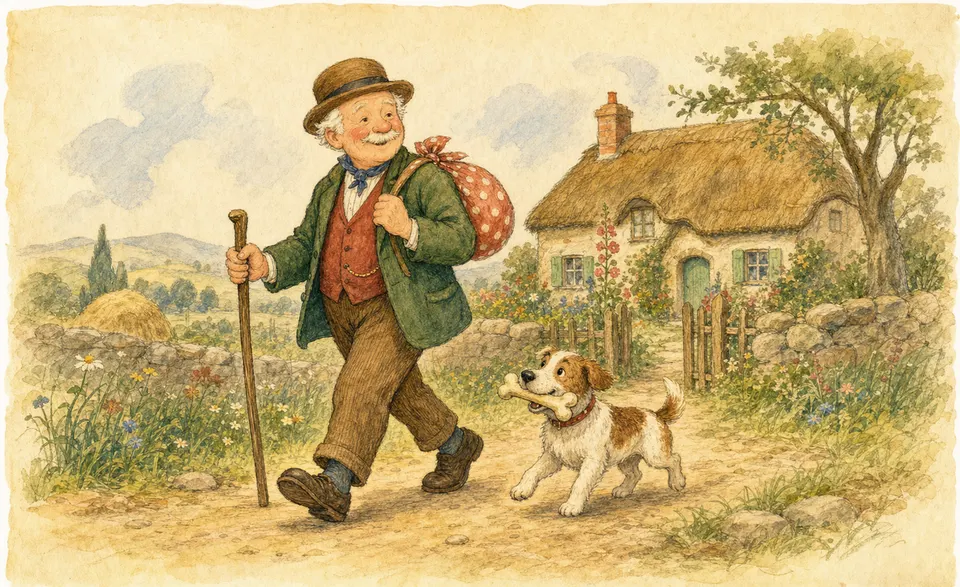
This old man, he played one, He played knick-knack on my thumb; With a knick-knack paddywhack, give a dog a bone, This old man came rolling home.
#This old man, he played two, He played knick-knack on my shoe; With a knick-knack paddywhack, give a dog a bone, This old man came rolling home.
#This old man, he played three, He played knick-knack on my knee; With a knick-knack paddywhack, give a dog a bone, This old man came rolling home.
#This old man, he played four, He played knick-knack on my door; With a knick-knack paddywhack, give a dog a bone, This old man came rolling home.
#This old man, he played five, He played knick-knack on my hive; With a knick-knack paddywhack, give a dog a bone, This old man came rolling home.
#This old man, he played six, He played knick-knack on my sticks; With a knick-knack paddywhack, give a dog a bone, This old man came rolling home.
#This old man, he played seven, He played knick-knack up to heaven; With a knick-knack paddywhack, give a dog a bone, This old man came rolling home.
#This old man, he played eight, He played knick-knack on my gate; With a knick-knack paddywhack, give a dog a bone, This old man came rolling home.
#This old man, he played nine, He played knick-knack all the time; With a knick-knack paddywhack, give a dog a bone, This old man came rolling home.
#This old man, he played ten, He played knick-knack once again; With a knick-knack paddywhack, give a dog a bone, This old man came rolling home.
#This Old Man at a glance
- Country of origin
- 🇬🇧 United Kingdom
- Sung in
- English
- Words by
- Traditional
- First known
- collected from the 1870s
- Best for ages
- 2–7
- Mood
- playful, traditional, counting
- Last updated
- 25 July 2026
How to sing it
- Hold up fingers for the number in each verse — one, two, three, up to ten.
- Tap the body part or object it rhymes with as you sing it — thumb, shoe, knee, door.
- Clap along to the "knick-knack paddywhack" refrain, which is the same every time.
Meaning and origin
Under the nonsense, this is a counting machine. Each verse takes the next number and finds something to rhyme it with — one on my thumb, two on my shoe, three on my knee — so a child climbs from one to ten almost without noticing, carried along by a refrain that never changes. That steady, repeating “knick-knack paddywhack, give a dog a bone” is the hook; the counting is the lesson smuggled underneath it.
Its beginnings are genuinely obscure. A cousin of the song, “Jack Jintle”, was written down from a Welsh nurse in the 1870s, and folk collectors printed similar counting rhymes in the early twentieth century, but there is no known author and no clear starting point.
The tune had a second life on screen. In 1958 it was reworked as “The Children’s Marching Song” for the film The Inn of the Sixth Happiness, which turned the old counting rhyme into a genuine popular hit and carried its melody far beyond the nursery.
Common questions
- What kind of song is "This Old Man"?
- A counting song. Each verse takes the next number and rhymes it with something — one on my thumb, two on my shoe, three on my knee — so children practise counting up to ten while the cheerful refrain stays the same.
- How old is it?
- Its origins are old and unclear. A related version, "Jack Jintle", was noted down from a Welsh nurse in the 1870s, and folk collectors printed similar songs in the early 1900s. Nobody knows who first made it.
- What does "knick-knack paddywhack" mean?
- Not much — it is mostly rhythmic nonsense that carries the refrain along. "Knick-knack" suggests a little tapping or rapping sound, and the whole line is there to be chanted and clapped rather than understood.
- Is "This Old Man" connected to a film?
- Its tune was adapted as "The Children's Marching Song" for the 1958 film "The Inn of the Sixth Happiness", which turned it into a popular hit and helped spread the melody widely.