Lyrics
Celotno besedilo pesmi »Sijaj, sijaj, sončece« z angleškim prevodom.
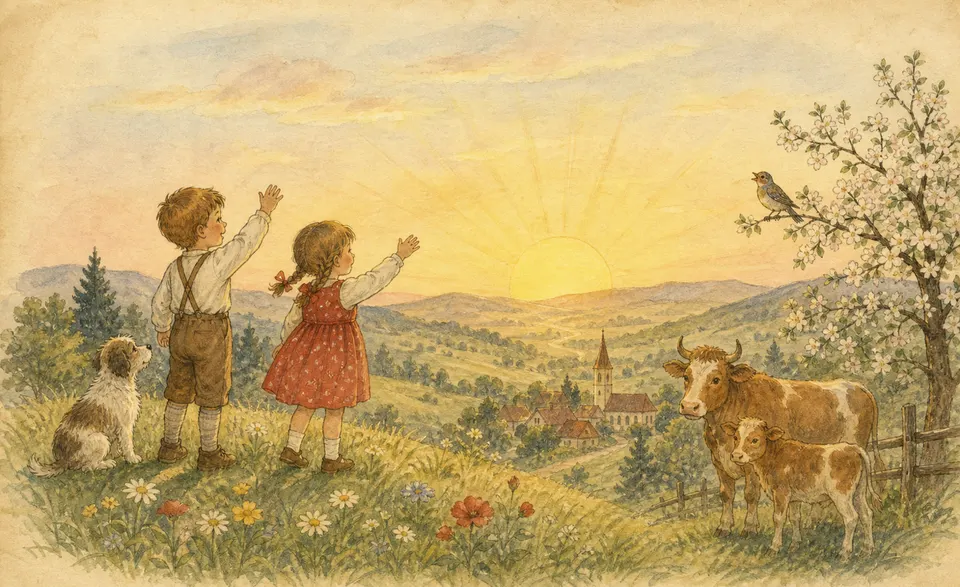
Sijaj, sijaj, sončece, oj sonce rumeno! Kako bom pa sijalo, k’ sem vedno žalostno.
#Če zjutraj zgodaj gori grem, dekleta jokajo, bi rade še ležale, pa vstati morajo.
#Če opoldne vroče sijem, se hlapci kregajo, bi v senčici ležali, pa delat’ morajo.
#Če zvečer zgodaj doli grem, pastirci tarnajo, domov bi radi gnali, pa črede nimajo.
#English translation
Shine, shine, little sun, oh, yellow sun! But how am I to shine, when I am always sad? If I rise early in the morning, the girls weep; they'd gladly lie in longer, but they have to get up. If I shine hot at noon, the farmhands bicker; they'd gladly lie in the shade, but they have to work. If I go down early in the evening, the shepherd boys lament; they'd gladly drive the herds home, but they have no herds at all.
#Sijaj, sijaj, sončece at a glance
- Country of origin
- 🇸🇮 Slovenia
- Sung in
- Slovenian
- Words by
- Traditional
- First known
- Slovenian folk song; author unknown
- Best for ages
- 2–7
- Mood
- traditional, lullaby
- Last updated
- 27 August 2026
Meaning and origin
This song has the shape of a bright sun-greeting but the heart of something wistful. It begins by coaxing the sun to shine — sijaj, sijaj, sončece, “shine, shine, little sun” — but then, unexpectedly, the sun answers that it can hardly shine when it is always sad. From there the melancholy spreads gently outward across an ordinary day.
Each verse finds a small sorrow. When the sun rises early in the morning, the girls weep, because they would rather stay in bed but must get up; when it shines hot at noon, the farmhands bicker, because they would rather lie in the shade but must work; when it goes down early in the evening, the shepherd boys lament, because they would drive their herds home but have no herds to drive. Nothing dramatic happens — it is simply the quiet, tired ache of country life, the too-early mornings and the too-hot noons. That soft wistfulness, folded into what sounds like a sunny song, is very characteristic of Slovenian folk music. It has no known author; it has simply been carried down, sun-bright and sad-hearted at once. The text on this page is the four-stanza version sung by Oktet Deseti brat on the Slovenske narodne pesmi site.
Common questions
- What is "Sijaj, sijaj, sončece" about?
- A gentle plea to the sun, and a touch of melancholy. The singer begs the yellow sun to shine — but the sun answers that it can hardly shine when it is always sad. When it rises early the girls weep, because they would rather stay in bed; when it shines hot at noon the farmhands bicker, because they would rather lie in the shade but must work; when it goes down early in the evening, the shepherd boys lament, because they would drive their herds home but have none.
- Is "Sijaj, sijaj, sončece" a happy song?
- It is bittersweet. It has the shape of a bright sun-song but a wistful heart, dwelling on early mornings, hot noons and small sorrows. That gentle wistfulness is very characteristic of Slovenian folk song.
- Where is "Sijaj, sijaj, sončece" from?
- It is a Slovenian folk song ("ljudska pesem") with no known author, carried down through the country's traditional repertoire.