Lyrics
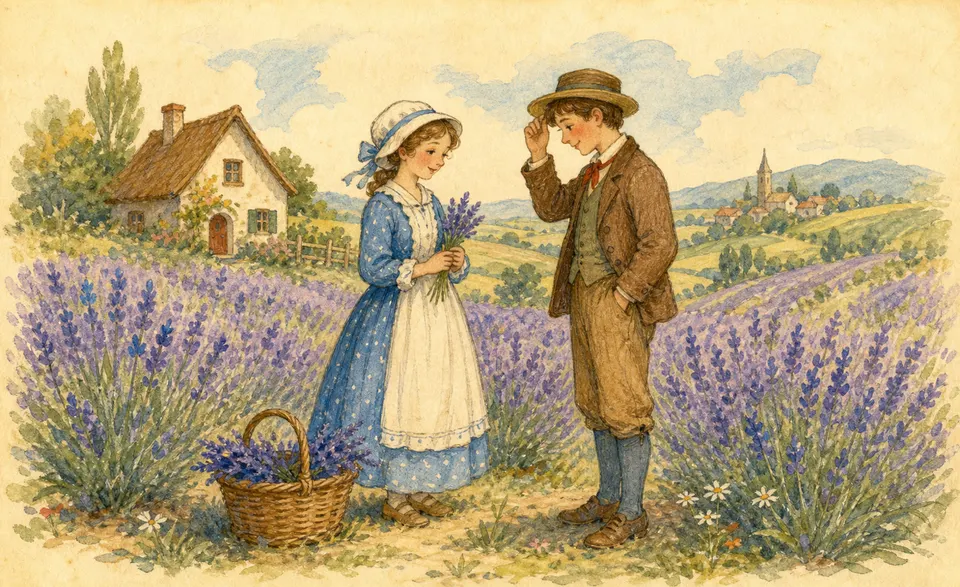
Lavender's blue, dilly dilly, lavender's green, When I am king, dilly dilly, you shall be queen. Who told you so, dilly dilly, who told you so? 'Twas my own heart, dilly dilly, that told me so.
#Call up your men, dilly dilly, set them to work, Some with a rake, dilly dilly, some with a fork. Some to make hay, dilly dilly, some to thresh corn, While you and I, dilly dilly, keep ourselves warm.
#Lavender's green, dilly dilly, lavender's blue, If you love me, dilly dilly, I will love you. Let the birds sing, dilly dilly, and the lambs play; We shall be safe, dilly dilly, out of harm's way.
#I love to dance, dilly dilly, I love to sing; When I am queen, dilly dilly, you'll be my king. Who told me so, dilly dilly, who told me so? I told myself, dilly dilly, I told me so.
#Lavender's Blue at a glance
- Country of origin
- 🇬🇧 United Kingdom
- Sung in
- English
- Words by
- Traditional
- First known
- c. 1672–1679
- Best for ages
- 2–7
- Mood
- traditional, calming
- Last updated
- 25 July 2026
Meaning and origin
This gentle song has had a surprising double life. Today it is a soft, almost lullaby-like children’s song, all “dilly dilly” and lambs at play — but it began as something rather different. The oldest surviving version is a broadside printed in England in the 1670s, called “Diddle Diddle, or The Kind Country Lovers”, and it was a frankly bawdy love song for grown-ups.
Its move to the nursery was a matter of tidying up. By 1805 a cleaned version had appeared in “Songs for the Nursery”, keeping the tune and the pretty refrain but quietly dropping the racier verses, and it is that softened form — a sweetheart imagining being king and queen together — that children have sung ever since.
It owes its lasting fame to the screen. Burl Ives sang “Lavender Blue (Dilly Dilly)” in the 1948 Disney film So Dear to My Heart, and the song was nominated for an Academy Award, produced several hit records the next year, and returned in Disney’s 2015 Cinderella — carrying a three-hundred-year-old country tune to new audiences each time.
Common questions
- How old is "Lavender's Blue"?
- Very old. The earliest surviving version is a broadside printed in England between about 1672 and 1679, under the title "Diddle Diddle, or The Kind Country Lovers". That original was a fairly bawdy love song for adults.
- How did "Lavender's Blue" become a children's song?
- By trimming. A cleaned-up version, keeping the pretty "dilly dilly" refrain and losing the racy lines, appeared in "Songs for the Nursery" in 1805, and it is that gentle form that children have sung ever since.
- Why is "Lavender's Blue" so widely known today?
- Largely thanks to film. Burl Ives sang a version, "Lavender Blue (Dilly Dilly)", in the 1948 Disney film "So Dear to My Heart"; it was nominated for an Academy Award, spawned several hit recordings in 1949, and was sung again in Disney's 2015 "Cinderella".
- What does "dilly dilly" mean?
- Nothing in particular — it is a soft, sing-song refrain that fills out each line, the kind of pleasant filler old folk songs are full of.