Lyrics
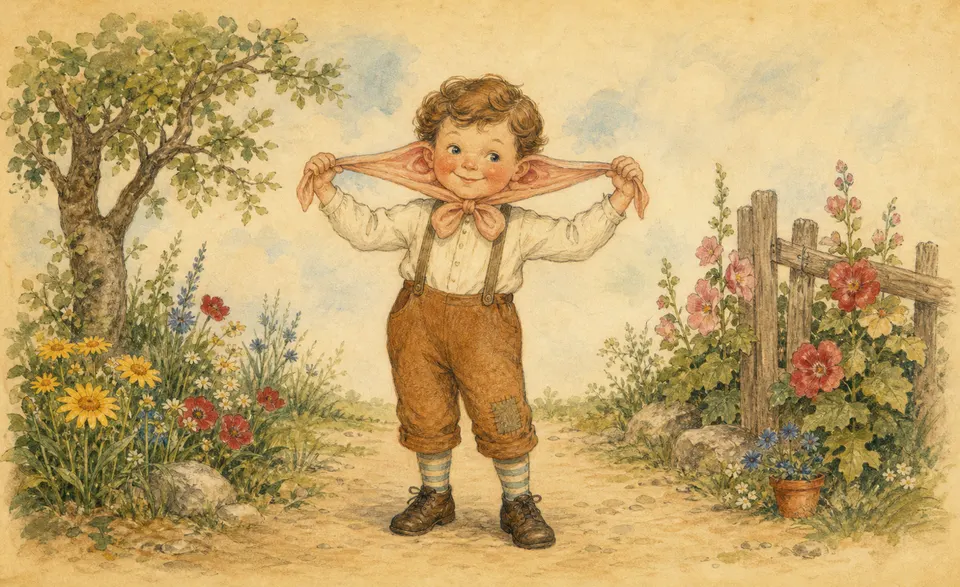
Do your ears hang low? Do they wobble to and fro? Can you tie them in a knot? Can you tie them in a bow? Can you throw them o'er your shoulder like a Continental Soldier? Do your ears hang low?
#Does your tongue hang down? Does it flop all around? Can you tie it in a knot? Can you tie it in a bow? Can you throw it o'er your shoulder like a Continental Soldier? Does your tongue hang down?
#Does your nose hang low? Does it wiggle to and fro? Can you tie it in a knot? Can you tie it in a bow? Can you throw it o'er your shoulder like a Continental Soldier? Does your nose hang low?
#Do your eyes pop out? Do they bounce all about? Can you tie them in a knot? Can you tie them in a bow? Can you throw them o'er your shoulder like a Continental Soldier? Do your eyes pop out?
#Do Your Ears Hang Low? at a glance
- Country of origin
- 🇺🇸 United States
- Sung in
- English
- Words by
- Traditional
- First known
- tune traced to "Zip Coon" (1838); bawdy version reported from c. 1900
- Best for ages
- 2–7
- Mood
- playful, traditional
- Last updated
- 27 August 2026
How to sing it
- Mime each action as you sing — pull your ears down long, wobble them, tie a knot, tie a bow.
- Throw them "over your shoulder like a Continental soldier" with a big arm swing.
- Speed up each time round, and swap in new body parts (tongue, nose, eyes) for extra silliness.
Meaning and origin
This is a song made entirely of impossible actions, and children adore it for exactly that reason. Can your ears hang low, wobble to and fro, be tied in a knot or a bow, be flung over your shoulder “like a Continental soldier”? Of course they can’t — and the fun is in trying to mime it anyway, then doing the same for your tongue, your nose and your popping eyes, faster and sillier each time. It is nonsense as a whole-body game.
Its melody is borrowed: it is usually sung to a short version of the American folk tune “Turkey in the Straw”, and the folklorist Ed Cray traces the song most likely to George Washington Dixon’s minstrel song “Zip Coon” of 1838. Its history is a little more grown-up than its playground reputation suggests. On Cray’s evidence the bawdy variant is the older one, reported from about 1900, and British soldiers sang it in the trenches of the First World War — in 1916 General Haig, hearing a battalion sing it on the road to the Somme, told its colonel that he liked the tune but the words were inexcusable. When and how the “ears” version arose is not documented; today a short, family-friendly form is sung at Cubs and Brownies events in the United Kingdom and Australia, and its cheerful impossibility keeps it going.
Common questions
- What is "Do Your Ears Hang Low?" about?
- Pure silliness. It asks whether your ears (then your tongue, nose and eyes) can do impossible things — hang low, wobble to and fro, be tied in a knot or a bow, and be thrown over your shoulder "like a Continental soldier". Children act it all out, which is the whole point.
- What tune is "Do Your Ears Hang Low?" sung to?
- Most often to a short version of the American folk tune "Turkey in the Straw" (it can also be sung to the "Sailor's Hornpipe"). The bouncy melody suits the exaggerated, comic actions.
- Where does "Do Your Ears Hang Low?" come from?
- The most likely source, according to the folklorist Ed Cray, is George Washington Dixon's minstrel song "Zip Coon" of 1838 — the tune is the American "Turkey in the Straw". Cray's evidence suggests the bawdy variant is the older one, with the earliest apparent report from about 1900. British soldiers sang it on the Western Front in the First World War; in 1916 General Douglas Haig, hearing a battalion sing it on the way to the Somme, told its colonel that he liked the tune but the words were "inexcusable". How and when the clean "ears" version arose is not documented; in the United Kingdom and Australia a short, family-friendly version circulates at Cubs and Brownies events.