Lyrics
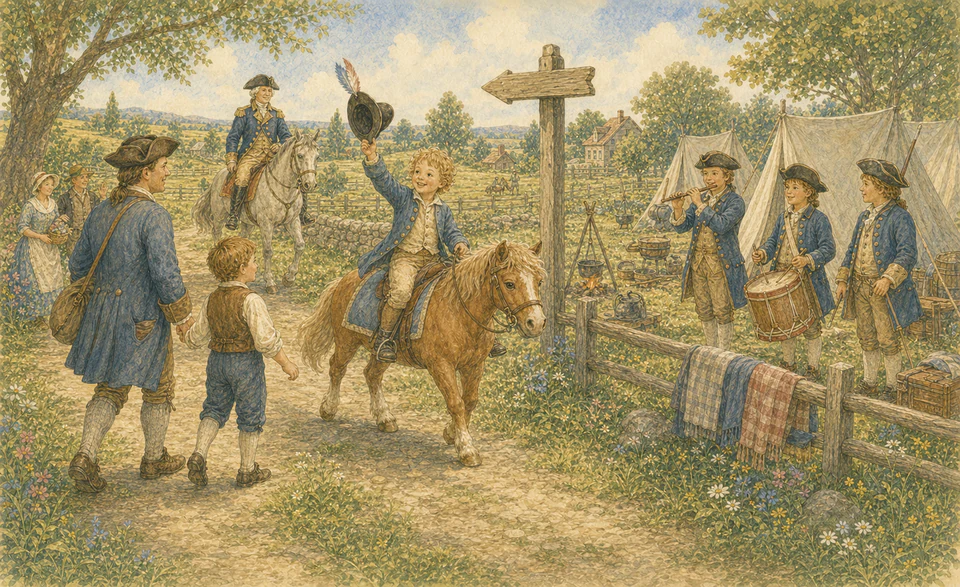
Yankee Doodle went to town, Riding on a pony; Stuck a feather in his cap, And called it macaroni. Yankee Doodle, keep it up, Yankee Doodle dandy; Mind the music and the step, And with the girls be handy. Father and I went down to camp, Along with Captain Gooding, And there we see the men and boys As thick as hasty pudding. Yankee Doodle, keep it up, Yankee Doodle dandy; Mind the music and the step, And with the girls be handy. And there was Captain Washington, And gentlefolks about him, They say he’s grown so tarnal proud, He will not ride without ’em. Yankee Doodle, keep it up, Yankee Doodle dandy; Mind the music and the step, And with the girls be handy.
#Yankee Doodle at a glance
- Country of origin
- 🌐 Unknown
- Sung in
- English
- Words by
- Traditional
- First known
- Documented by 1767
- Best for ages
- 4–9
- Mood
- playful, traditional
- Last updated
- 27 August 2026
How to sing it
- Begin slowly so everyone can hear the repeated words and the action cue.
- March to a steady beat, mime riding and placing a feather in a cap, and keep the historical explanation separate from the playful actions.
- Repeat the song once and invite a different child to lead the cues.
Meaning and origin
The best-known verse describes a rider who goes to town, puts a feather in his cap and calls it “macaroni.” In the song’s eighteenth-century setting, the words were meant as mockery. The Library of Congress explains that “Yankee” was used for English colonists, especially New Englanders, while “doodle” meant a foolish person or country bumpkin. “Macaroni” pointed to an exaggerated fashionable style, so the feather was presented as a rustic attempt at sophistication.
The Library of Congress finds references to “Yankee Doodle” by 1767, but calls the origin obscure. The familiar attribution to British army surgeon Richard Schackburg (as the Library spells him) rests on tradition rather than firm evidence, so this page does not name him as the author. British troops used the song to ridicule colonial soldiers; Americans later adopted the tune and added verses, turning an insult into a song associated with their own side.
Children can still march, mime the pony and place an imaginary feather in a cap, but the historical explanation matters. Keeping it beside the playful actions shows why apparently silly words such as “doodle” and “macaroni” carried a sharper meaning when the song was new.
Common questions
- What do “Yankee” and “doodle” mean in Yankee Doodle?
- The Library of Congress says “Yankee” referred to English colonists, especially New Englanders, by the 1770s, while “doodle” meant a silly person or country bumpkin. The words were originally part of the song’s mockery.
- Was Yankee Doodle always an American patriotic song?
- No. British troops used it to ridicule colonial soldiers before the American Revolution. Americans later adopted the tune and added verses that turned the mockery back on the British.