Lyrics
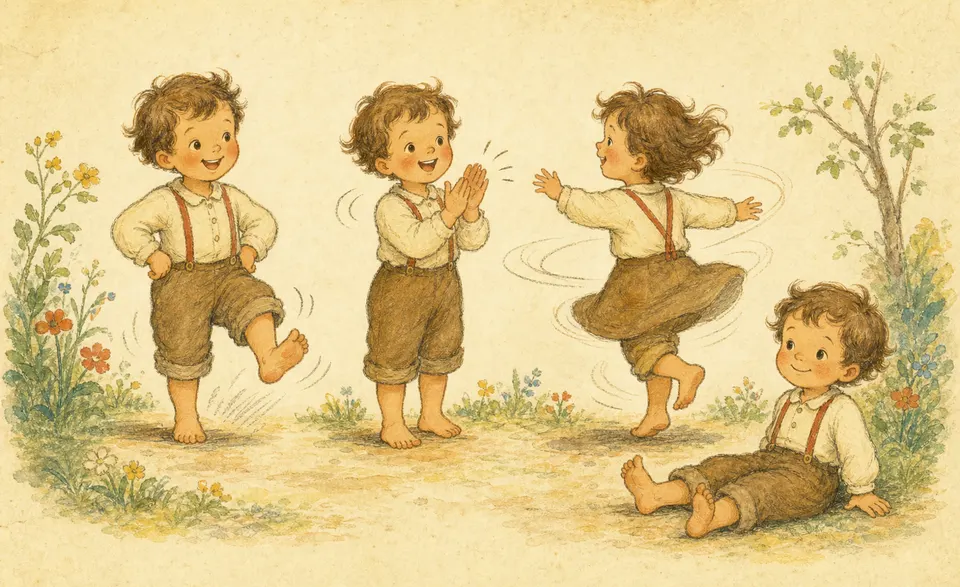
Two little feet go stamp, stamp. Two little hands go clap, clap. One little body stands up straight, One little body goes round and round, One little body sits quietly down.
#Two Little Feet at a glance
- Country of origin
- 🌐 Unknown
- Sung in
- English
- Words by
- Traditional
- First known
- No author or date recorded; the only source retrieved is a 2011 California Kindergarten Association post
- Best for ages
- 2–7
- Mood
- playful
- Last updated
- 27 August 2026
How to sing it
- Stamp your feet twice, then clap your hands twice, matching the words.
- Stand up tall, then turn round and round.
- Sit quietly down at the end to settle everyone.
Meaning and origin
This is a whole-body action rhyme with a calming plan built into it. It runs briskly through a sequence of movements — two feet stamping, two hands clapping, one body standing up straight, turning round and round — and then, deliberately, brings everything to rest: one little body sits quietly down. All the energy is spent in the stamping and spinning, so the quiet ending arrives naturally rather than as an order.
That is exactly why teachers keep it handy. Like several nursery rhymes, it uses plenty of movement to reach stillness, making it useful for the moment before a story or a rest. The one source we have found for it is a 2011 teaching-tip post by the California Kindergarten Association, which prints the words and actions but names no author and gives no origin — so the page does not call it traditional and does not assign it a country. Its gift is the tidy landing at the end, where a room full of stamping, spinning children folds neatly back down onto the floor.
Common questions
- What is "Two Little Feet" for?
- Following actions and settling down. It runs through a quick sequence — stamp the feet, clap the hands, stand up straight, spin round and round, and sit quietly down — so children move a lot and then finish calm and seated.
- What does "Two Little Feet" teach?
- Listening and doing each action on cue, and using up energy before quieting down. Because it ends by sitting quietly, it is handy for bringing a lively group back to stillness.
- Who wrote "Two Little Feet"?
- No author is named. The only source we have found for the rhyme is a 2011 "Tuesday Teaching tip" post by the California Kindergarten Association, which prints the words with their actions but says nothing about who wrote them or where they come from. Its country of origin is therefore not established.