Lyrics
Der vollständige Liedtext von „Tischspruch für das Mittagessen“ mit englischer Übersetzung.
Tiger, Löwe, Katze, wir reichen uns die Tatze, guten Appetit!
#English translation
Tiger, lion, cat, we give each other our paw, enjoy your meal!
#Tischspruch für das Mittagessen at a glance
- Country of origin
- 🇩🇪 Germany
- Sung in
- German
- Words by
- Traditional
- First known
- traditional table rhyme; author unknown
- Best for ages
- 2–7
- Mood
- playful, traditional
- Last updated
- 25 July 2026
Meaning and origin
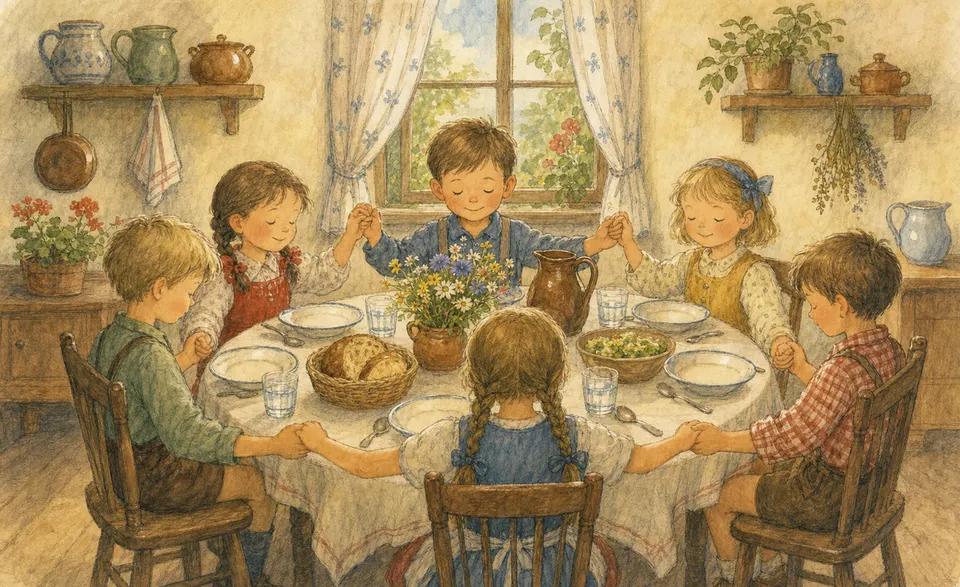
This is a Tischspruch — a little rhyme said together at the table just before a meal, the German children’s version of saying grace or wishing “enjoy your food”. This one is pure play: it lines up three cats, from the huge (tiger, lion) to the small (the house cat), and has everyone “give a paw” — that is, join hands around the table — before the cheerful ending, guten Appetit!
Table rhymes like this are a folk tradition with no single author and endless local variations; this is simply one charming version. Its purpose is gentle: it gathers a group of children for a shared moment before eating, teaches the small courtesy of a mealtime greeting, and lets them do it with a giggle and a shake of the “paw” rather than solemnity.
Common questions
- What is a "Tischspruch"?
- A short verse said together at the table just before eating — the German children's equivalent of a little grace or "enjoy your meal". This one is playful rather than religious: it names three cats (tiger, lion, house cat), everyone joins "paws" (holds hands), and it ends "guten Appetit!".
- Why tiger, lion and cat?
- Because they are all cats, big and small, and giving a "paw" (Tatze) is a cheerful way of describing the children joining hands around the table. It turns a mealtime custom into a small joke the children can act out.
- Who wrote "Tischspruch für das Mittagessen"?
- No author or origin is recorded. Table rhymes like this are a folk tradition, passed on in families and kindergartens, with countless local versions.