Lyrics
Celotno besedilo pesmi »Ob bistrem potoku je mlin« z angleškim prevodom.
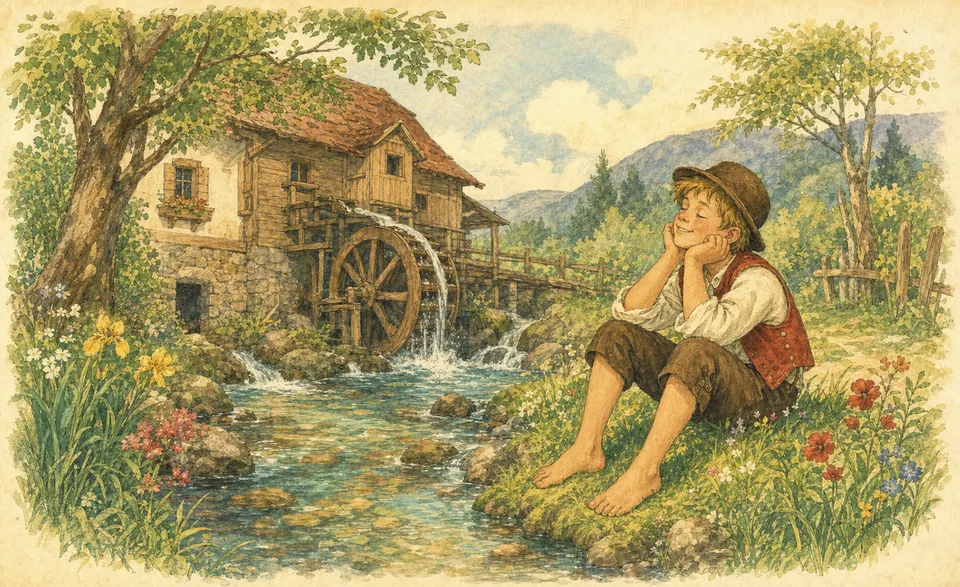
Ob bistrem potoku je mlin, a jaz sem pa mlinarjev sin, ko mlinček ropoče in voda šumlja, srce mi veselo igra, igra (2x)
#Če mlinček pri miru bi stal, bi mlinar in kmet žaloval, in otrok bi jokal in tožil glasno, kako je brez kruha hudo, hudo.
#English translation
By the clear brook stands a mill, and I am the miller's son; when the little mill clatters and the water rushes, my heart plays merrily, plays merrily. (×2) If the little mill were to stand still, the miller and the farmer would grieve, and the child would weep and loudly lament how hard it is with no bread, no bread.
#Ob bistrem potoku je mlin at a glance
- Country of origin
- 🇸🇮 Slovenia
- Sung in
- Slovenian
- Words by
- Traditional
- First known
- Slovenian folk song; author unknown
- Best for ages
- 2–7
- Mood
- traditional, playful
- Last updated
- 25 July 2026
Meaning and origin
This gentle Slovenian folk song is really a hymn to a working mill. The singer is the miller’s son, and the happy clatter of the mill wheel and the rush of the water set his heart dancing — the busy noise of the mill is, to him, the sound of everything being as it should be. It is a song rooted in an older rural world, where the watermill by the brook was the very centre of daily life.
The second verse quietly explains why. If the mill fell silent, it says, the miller and the farmer would grieve and children would cry — because a stopped mill means no flour, and no flour means no bread. In two short verses the song moves from simple joy to the serious truth underneath it, teaching, almost in passing, where a loaf of bread comes from. It is a folk song with no known author, carried down through generations, and its warm, turning rhythm still sounds exactly like a mill hard at happy work.
Common questions
- What is "Ob bistrem potoku je mlin" about?
- A mill and the miller's son. By a clear brook stands a mill, and the singer is the miller's son; when the mill clatters and the water rushes, his heart plays merrily. The second verse gives it weight: if the mill stood still, the miller and the farmer would grieve and children would cry, because a stopped mill means no bread.
- Why does "Ob bistrem potoku je mlin" matter if the mill stops?
- Because the mill grinds the grain into flour for bread. In the old rural world the song comes from, a working watermill meant food on the table, so its busy clatter is a happy, reassuring sound — and its silence would mean hunger.
- Where is "Ob bistrem potoku je mlin" from?
- It is a Slovenian folk song ("ljudska pesem") with no known author, long sung as part of the country's traditional and children's repertoire.