Lyrics
Celotno besedilo pesmi »Dobro jutro, stric Pondeljek« z angleškim prevodom.
As recited in Slovenian kindergartens
Dobro jutro, stric Ponedeljek, boter Torek je že vstal? Prav zares, soseda Sreda, dobro se je nasmrčal. Pa je prišel ponj Četrtek, k ujcu Petku sta odšla, na križišču sredi pota se pridruži še Sobota, ta pripelje še mesarja in zakoljejo komarja, naredijo krvavice, klobasice, pečenice, saj bo jutri dan veselja – v vas prispe gospa Nedelja.
#Shorter variant
Dobro jutro, stric Ponedeljek, boter Torek je že vstal. Prav zares, soseda Sreda, dobro se je nasmrčal. Pa je prišel ponj Četrtek, k ujcu Petku sta odšla. Na križišču sredi pota se pridruži še Sobota. Ta pripelje še mesarja in zakoljejo komarja, saj bo jutri dan veselja, v vas prispe gospa Nedelja.
#English translation
Good morning, Uncle Monday, is Godfather Tuesday up yet? Indeed he is, neighbour Wednesday, he has had a good long snore. Then Thursday came to fetch him, and the two went off to Uncle Friday; at the crossroads halfway along Saturday joins them too, and brings a butcher along, and they slaughter a mosquito and make blood sausages, little sausages and roasting sausages, for tomorrow is the day of joy – Lady Sunday arrives in the village. (Shorter variant: the same, without the sausage-making lines.)
#Rights
The words of this song are by Albert Širok and are still in copyright. They are reproduced here, credited, for family and classroom singing; no reuse licence has been obtained, and nothing on this page may be copied further. Rightsholders can ask for a correction or removal — see lyrics & credits.
Dobro jutro, stric Pondeljek at a glance
- Country of origin
- 🇸🇮 Slovenia
- Sung in
- Slovenian
- Words by
- Albert Širok
- First known
- Poem "Dnevi v tednu", credited to Albert Širok (1895–1985); date of publication not established
- Best for ages
- 2–7
- Mood
- playful, traditional
- Last updated
- 27 August 2026
Meaning and origin
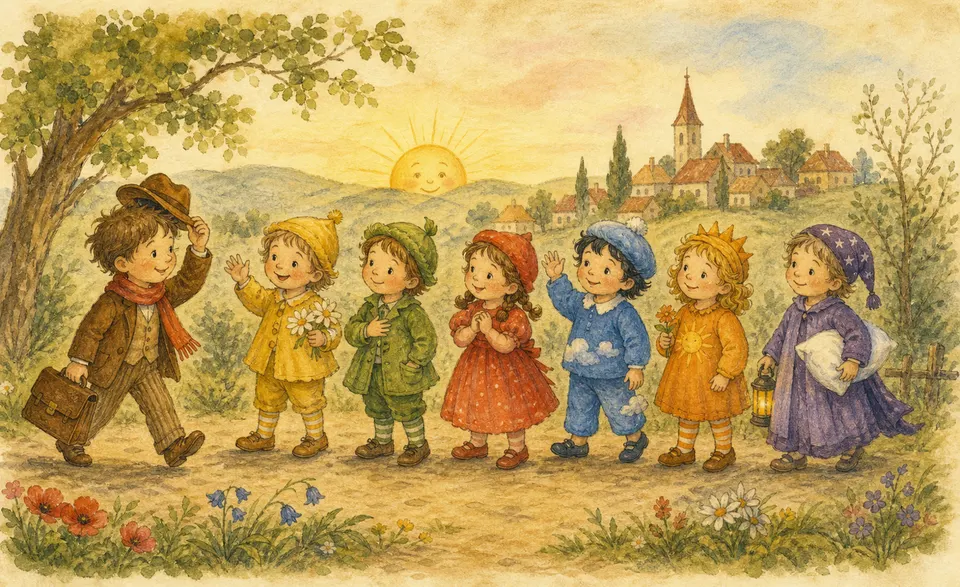
This is a teaching poem in disguise — a delightful way to learn the days of the week. Instead of a dry list, it turns each day into a character in a little village world: Monday is an uncle (stric), Tuesday a godfather (boter), Wednesday a neighbour (soseda), Friday another uncle — an ujec, a mother’s brother — and one by one they fetch each other along the road. Thursday comes for Tuesday, the two call on Friday, Saturday joins at the crossroads, all building toward the arrival, on the day of joy, of the grandest character of all: Lady Sunday.
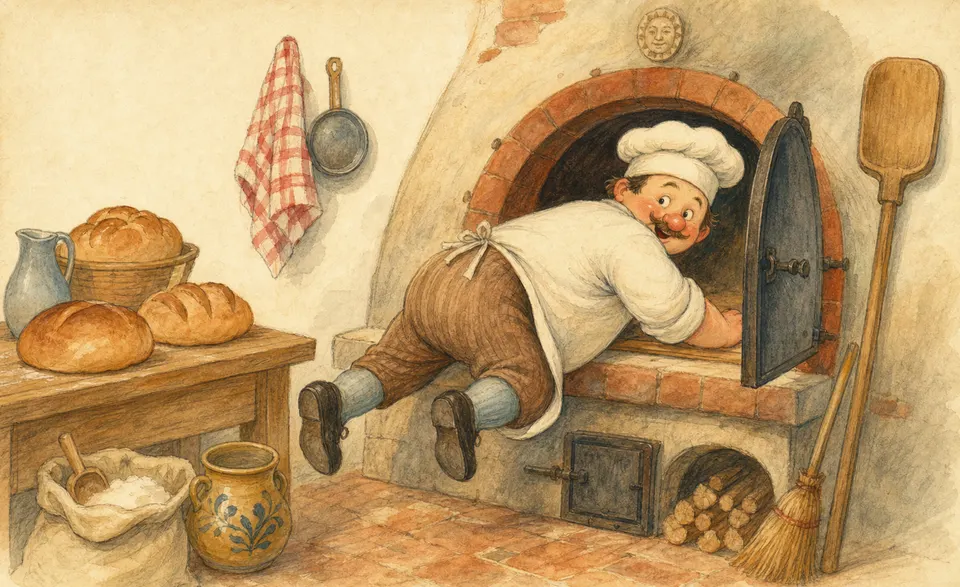
Because the days come in order and each leads to the next, a child learns the shape of the week almost without noticing. The poem’s flourish of nonsense is Saturday’s doing: she brings a butcher, they slaughter a mosquito, and from it they make krvavice, klobasice and pečenice — blood sausages, little sausages and roasting sausages — for the feast, a joke that turns the coming of Sunday into a celebration worth the whole week’s preparation. A shorter variant keeps the mosquito and drops the sausages.
Slovenian kindergartens, where it is recited under the title Dnevi v tednu (“Days of the Week”), credit it to Albert Širok (1895–1985), a poet, translator and editor who also published a collection of children’s verse. We have not found the poem’s original publication, so its date is not known, and the text here is the one passed around in kindergartens rather than a printed edition — one copy reads “k stricu Petku” (Uncle Friday) where the others have “k ujcu Petku”. Either way, it remains a favourite for exactly the reason it was written: it makes the calendar into a story.
Common questions
- What is "Dobro jutro, stric Pondeljek" about?
- The days of the week, made into a little village of characters. Monday is an uncle, Tuesday a godfather, Wednesday a neighbour, Friday another uncle, and each fetches the next along the road; Saturday brings a butcher, they slaughter a mosquito and make sausages for the feast — because tomorrow is the day of joy, when Lady Sunday arrives in the village. It is a poem designed to teach children the order of the week.
- Who wrote "Dobro jutro, stric Pondeljek"?
- Slovenian kindergartens credit it to the poet, translator and editor Albert Širok (1895–1985) under the title "Dnevi v tednu" ("Days of the Week"). We have not been able to trace the poem's original publication, so the date is not known; the text given here is the one recited in kindergartens, which prints the name with the standard spelling "Ponedeljek" (the title's "Pondeljek" is a colloquial form).
- What's the joke about the mosquito?
- Saturday brings along a butcher, and together they "slaughter a mosquito" and make blood sausages, little sausages and roasting sausages out of it for the feast — a piece of playful nonsense that makes the coming of Sunday feel like a grand celebration worth preparing for. A shorter variant keeps the mosquito but drops the sausages.