Lyrics
Der vollständige Liedtext von „Das ist Papa-Maus“ mit englischer Übersetzung.
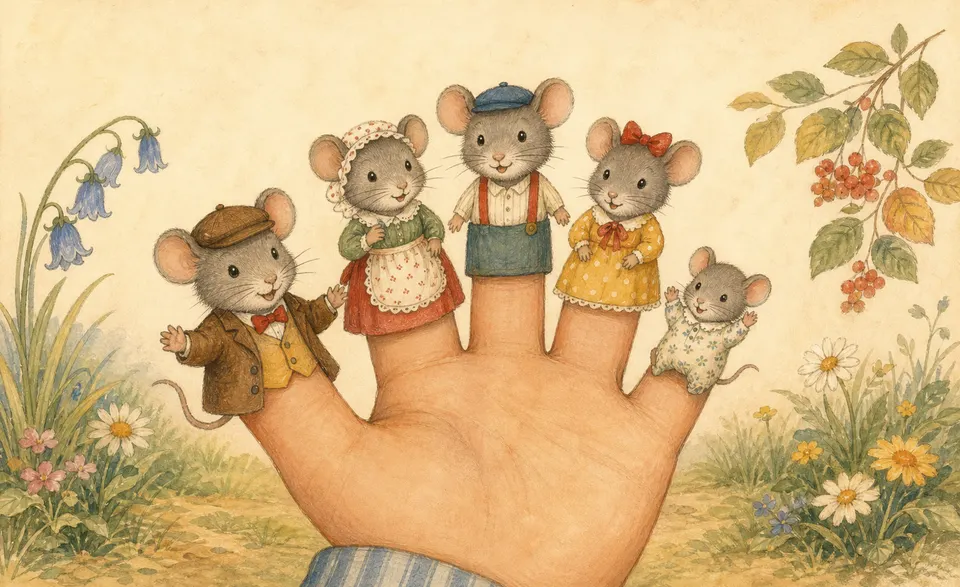
Das ist Papa-Maus, sieht wie alle Mäuse aus. Hat große Ohren, eine spitze Nase, weiches Fell, und einen Schwanz, der ist so lang.
#Das ist Mama-Maus, sieht wie alle Mäuse aus. Hat große Ohren, eine spitze Nase, weiches Fell, und einen Schwanz, der ist so lang.
#Das ist Bruder-Maus, sieht wie alle Mäuse aus. Hat große Ohren, eine spitze Nase, weiches Fell, und einen Schwanz, der ist so lang.
#Das ist Schwester-Maus, sieht wie alle Mäuse aus. Hat große Ohren, eine spitze Nase, weiches Fell, und einen Schwanz, der ist so lang.
#Das ist Baby-Maus, sieht nicht wie alle Mäuse aus. Hat kleine Ohren, eine platte Nase, strubbeliges Fell, und einen Schwanz, der ist so kurz.
#English translation
This is Papa Mouse, looks like all the mice. Has big ears, a pointed nose, soft fur, and a tail that is this long. This is Mama Mouse, looks like all the mice. Has big ears, a pointed nose, soft fur, and a tail that is this long. This is Brother Mouse, looks like all the mice. Has big ears, a pointed nose, soft fur, and a tail that is this long. This is Sister Mouse, looks like all the mice. Has big ears, a pointed nose, soft fur, and a tail that is this long. This is Baby Mouse, doesn't look like all the mice. Has small ears, a flat nose, scruffy fur, and a tail that is this short.
#Das ist Papa-Maus at a glance
- Country of origin
- 🇩🇪 Germany
- Sung in
- German
- Words by
- Traditional
- First known
- traditional finger-play; author unknown
- Best for ages
- 2–7
- Mood
- playful, traditional
- Last updated
- 25 July 2026
Meaning and origin
This is a finger game about a family of mice. Each finger becomes one mouse — Papa, Mama, brother, sister — and for every one the singer points out the same set of features: big ears, a pointed nose, soft fur, and a nice long tail. The repetition is the fun; the child knows what is coming each time and can chime in.
Then comes the twist. The last and littlest finger is the baby mouse, who does not look like all the others: small ears, a flat nose, scruffy fur and a short little tail — every detail turned to its opposite. In one gentle joke the game teaches both the fingers and the idea of big-versus-small, long-versus-short. No author or origin is recorded for it; it is a traditional finger-play shared by ear in nurseries, kept going simply because small children love to meet the odd little baby mouse at the end.
Common questions
- How do you play "Das ist Papa-Maus"?
- As a finger game. Each finger is one mouse in the family — Papa, Mama, brother, sister — and for each you point out the same features: big ears, a pointed nose, soft fur, and a long tail. The joke comes with the last, littlest finger: the baby mouse has small ears, a flat nose, scruffy fur and a short tail.
- What is "Das ist Papa-Maus" good for?
- Learning the fingers and some describing words at once. By repeating "big ears, pointed nose, soft fur, long tail" for each mouse and then changing every detail for the baby, it teaches both counting on the fingers and the idea of opposites (big/small, long/short).
- Who wrote "Das ist Papa-Maus"?
- No author or firm origin is recorded for it. It is a traditional finger-play of the kind shared informally in crèches and playgroups rather than written by a known composer.