Lyrics
A ram sam sam, a ram sam sam Guli guli guli guli guli ram sam sam A ram sam sam, a ram sam sam Guli guli guli guli guli ram sam sam
#A rafiq, a rafiq Guli guli guli guli guli ram sam sam A rafiq, a rafiq Guli guli guli guli guli ram sam sam
#English translation
English gloss
A ram sam sam, a ram sam sam (nonsense), tell me, tell me, tell me, tell me, tell me, ram sam sam. A ram sam sam, a ram sam sam, tell me, tell me, tell me, tell me, tell me, ram sam sam. A friend, a friend, tell me, tell me, tell me, tell me, tell me, ram sam sam. A friend, a friend, tell me, tell me, tell me, tell me, tell me, ram sam sam.
#Aram sam sam at a glance
- Country of origin
- 🇲🇦 Morocco
- Sung in
- Moroccan Arabic
- Words by
- Traditional
- First known
- not documented; described as a Moroccan children's song
- Best for ages
- 2–7
- Mood
- dancing, playful
- Last updated
- 27 August 2026
How to sing it
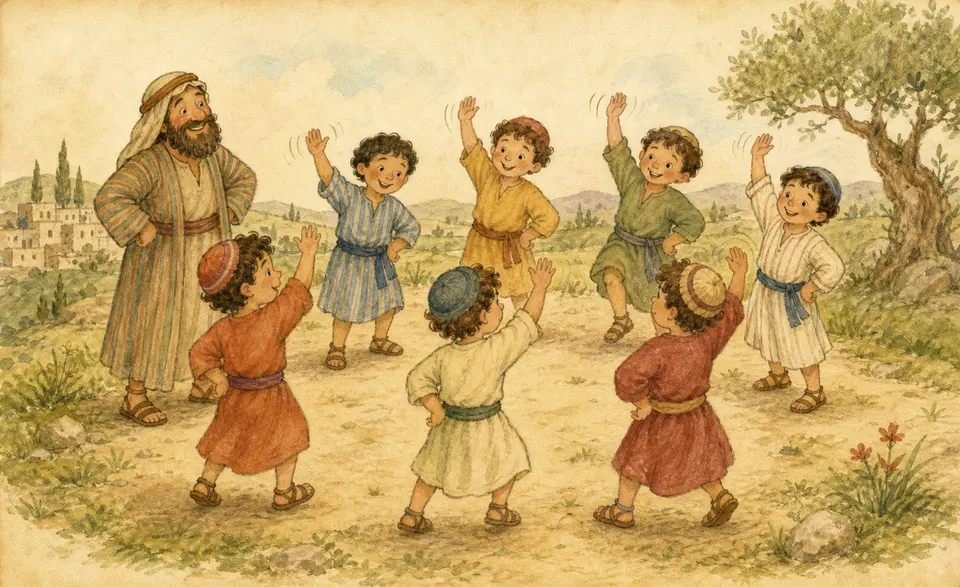
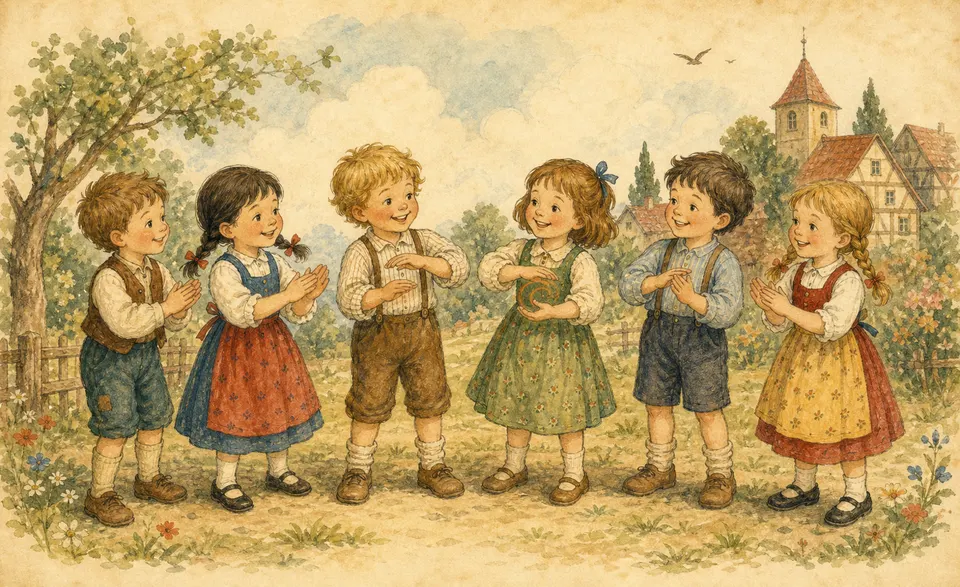
- On "a ram sam sam", cross your fists right over left, then left over right, in time (or tap your hands on your thighs).
- On "guli guli", pull your hands apart as if they were sticky (or roll them around each other).
- On "a rafiq", twirl your index fingers at the sides of your head and finish by pointing them upward; it can also be sung as a round.
Meaning and origin
Almost every German nursery knows this song, and almost nobody there realises it is not German at all. The German Wikipedia article describes “A Ram Sam Sam” as a Moroccan children’s song and game, sung in the Moroccan dialect of Arabic, that has travelled so far and so widely — through scout camps, playgroups and music classes across Europe — that it now feels like a local tradition wherever it lands. It is also spelled “Aram sam sam” and “A rum sum sum”, and sung with “zam zam” for “sam sam”.
The words are mostly pure play. “Ram sam sam” has no recognisable meaning; it is there for the rhythm and the fun of saying it. Only two fragments carry sense — “guli guli guli” is “tell me, tell me, tell me”, and “a rafiq” is “a friend, a companion” — but the song does not depend on meaning. It depends on sound and speed.
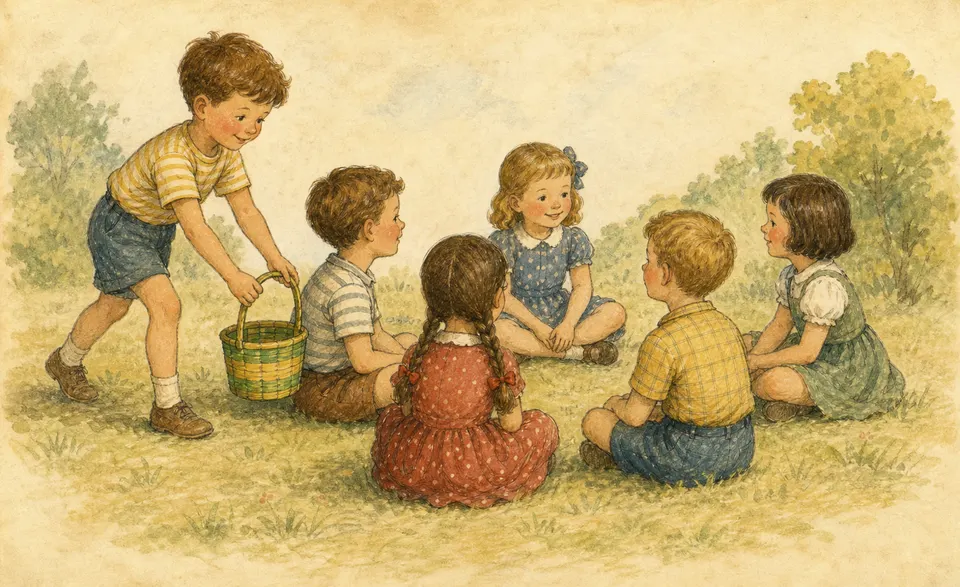
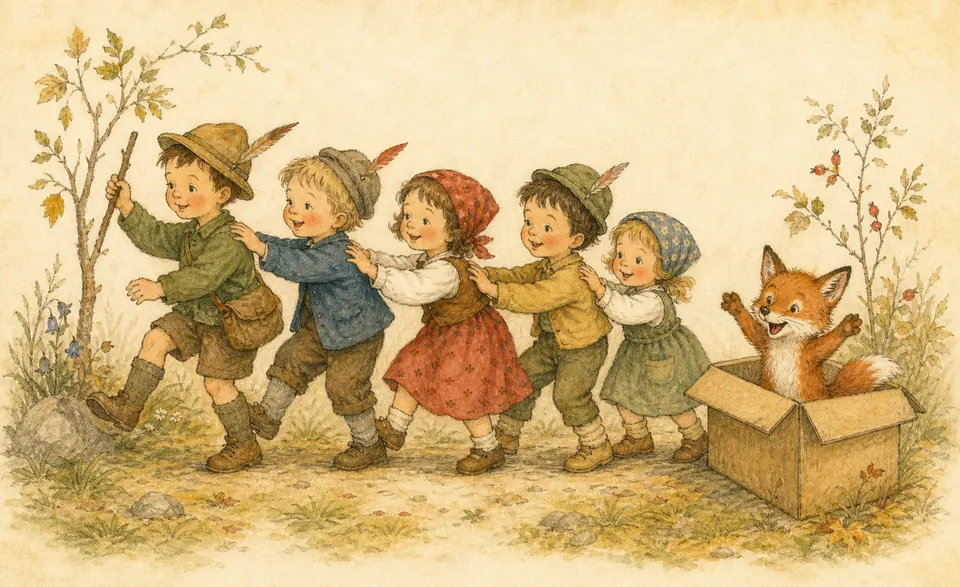
Really it is an action game wearing a song’s clothes. Each phrase has its own gesture — fists crossed one over the other, hands pulled apart as if sticky, index fingers twirling at the temples and then pointing to the sky — and the whole thing is usually sung in a circle, or, when it is not played as a game, as a round in overlapping parts. That is why it crosses every border so easily: you do not need the language to join in, only your hands.
Common questions
- Where is "A Ram Sam Sam" really from?
- It is a Moroccan children's song and game, sung in Moroccan Arabic. Although it is enormously popular in Germany and across Europe as a nursery action song, its origin is North African, not European.
- What do the words mean?
- Most of them are playful nonsense — "a ram sam sam" has no recognisable meaning. Two fragments do translate: "guli guli guli" is "tell me, tell me, tell me", and "a rafiq" is "a friend, a companion".
- How is "Aram sam sam" played?
- As an action song, usually in a circle. Each phrase has its own movement — crossed fists for "a ram sam sam", sticky hands pulled apart for "guli guli", index fingers twirled by the head for "a rafiq" — and when it is not played as a game it can be sung as a round.