Lyrics
Celotno besedilo pesmi »Gosenica« z angleškim prevodom.
Gosenica je lezla počasi na drevo, pomigala na dolgo, pomigala kratko.
#Primigala je k meni, v lonček sem jo dal, nikar mi ne pobegni, zažugal sem, dejal.
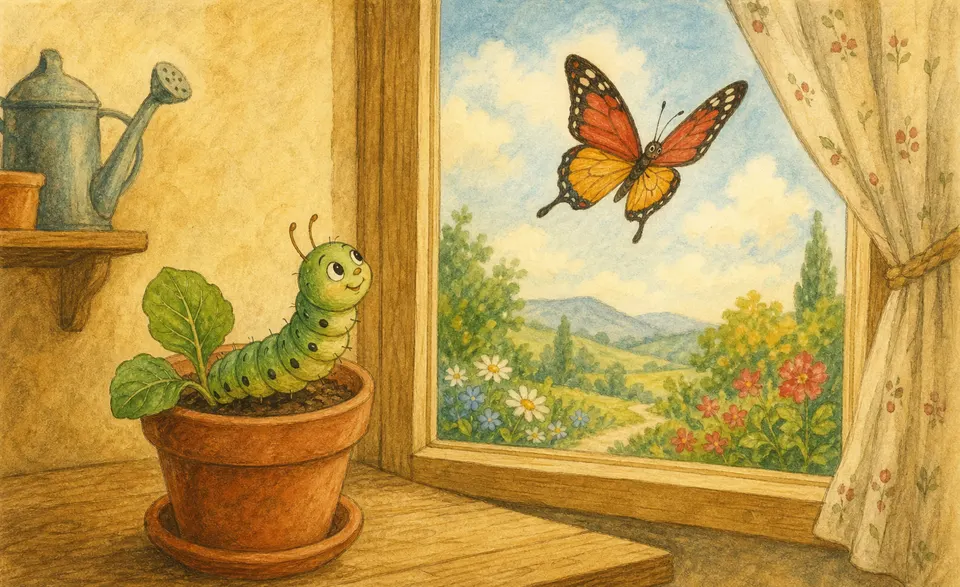
#Ko v lonček sem pogledal, je notri ni bilo, pred oknom pa je letal metuljček prelepo.
#English translation
A caterpillar crawled slowly up the tree, it wiggled a long wiggle, it wiggled a short one. It wiggled its way over to me, I put it in a little pot, "don't you run away from me," I said, wagging my finger. When I looked into the pot, it wasn't inside any more, but past the window there flew a butterfly, so lovely.
#Gosenica at a glance
- Country of origin
- 🇸🇮 Slovenia
- Sung in
- Slovenian
- Words by
- Traditional
- First known
- Slovenian children's song; author not documented
- Best for ages
- 2–7
- Mood
- playful, traditional
- Last updated
- 27 August 2026
How to sing it
- On the first verse, walk your fingers slowly up your other arm like a caterpillar, stretching long and then short.
- On "v lonček sem jo dal", cup one hand into a little pot and drop the caterpillar in.
- Wag a finger on "nikar mi ne pobegni" — don't you run away!
- On "je notri ni bilo", show empty hands — nothing there.
- On the last line, flap your hands together like a butterfly flying past the window.
- Sing it slowly with the youngest children, so they can follow the words and copy the movements.
Meaning and origin
This gentle song hides a small piece of natural magic inside a nursery story. A caterpillar crawls slowly up a tree, wiggling long and short; the child coaxes it over, pops it into a little pot, and wags a finger — don’t you run away from me. But when the child looks back into the pot, the caterpillar has vanished, and a beautiful butterfly is flying past the window instead.
The lovely thing is what the song leaves unsaid. It never explains that a caterpillar becomes a butterfly; it simply lets the child discover it, through the empty pot and the sudden shimmer at the window — the same delighted surprise a real child feels on learning it for the first time. It is a finger-play as much as a song: fingers creep up an arm for the caterpillar, a cupped hand makes the pot, a wagging finger scolds, empty hands show the pot bare, and two hands flutter for the butterfly.
Who wrote it, we cannot say. Kindergartens and parenting blogs print it without a name, and the singer Romana Krajnčan has recorded it — her 1999 recording is on the album Tuba Luba — but none of the sources we found says whether the words are hers or older. Until one does, it is treated here as traditional, and its quiet trick of turning a science lesson into a small wonder is exactly why it lasts.
Common questions
- What is "Gosenica" about?
- A caterpillar's secret transformation. A caterpillar crawls slowly up a tree, wiggling long and short; the child coaxes it over and puts it in a little pot, wagging a finger and warning it not to run away. But when the child looks inside, the caterpillar is gone — and a beautiful butterfly is flying past the window. Without saying so directly, the song shows a caterpillar becoming a butterfly.
- What does "Gosenica" teach?
- The idea of metamorphosis, gently and by surprise. Rather than explaining that caterpillars turn into butterflies, it lets the child discover it through the little story — the empty pot and the butterfly at the window.
- Who wrote "Gosenica"?
- No source we found says. It is sung in Slovenian kindergartens and printed on parenting blogs without any author's name, and the singer Romana Krajnčan has recorded it (a 1999 recording of hers is on the album "Tuba Luba"), but none of these sources states who wrote the words, so it is treated here as traditional.