Lyrics
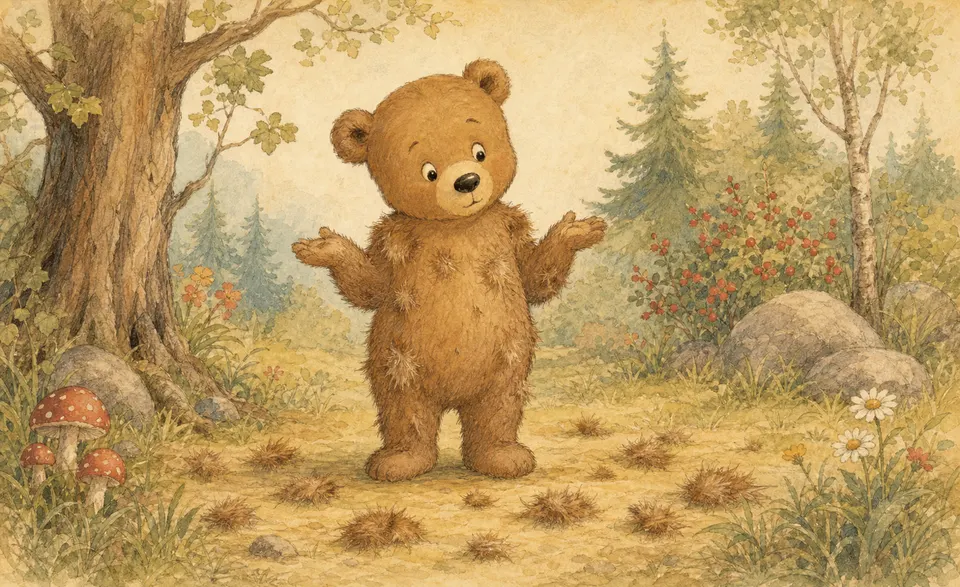
Fuzzy Wuzzy was a bear, Fuzzy Wuzzy had no hair! Fuzzy Wuzzy wasn't very fuzzy, Was he?
#Fuzzy Wuzzy at a glance
- Country of origin
- 🌐 Unknown
- Sung in
- English
- Words by
- Traditional
- First known
- first mentioned in 1942 according to allnurseryrhymes.com; origin not documented
- Best for ages
- 2–7
- Mood
- playful, traditional
- Last updated
- 27 August 2026
Meaning and origin
This is a joke and a tongue-twister rolled into four short lines. It sets up a bear called Fuzzy Wuzzy, then pulls the rug out — Fuzzy Wuzzy had no hair — and lands on the gentle riddle that follows from it: if he had no hair, then he “wasn’t very fuzzy, was he?” Children enjoy the little logical trap as much as the silliness of a bald bear.
Its real challenge, though, is in the saying. Cramming so many buzzing fuzzy / wuzzy / wasn’t sounds together makes the tongue stumble, which is exactly what a tongue-twister is for. It has no known author and no documented country of origin — the only history our source offers is a first mention in 1942, in a magazine it calls “The Yorker”, with nothing said about where the rhyme came from — and it survives because it does two things children love at once: it makes a joke, and it dares you to say it fast.
Common questions
- What is "Fuzzy Wuzzy"?
- A tongue-twister and word-joke. Fuzzy Wuzzy was a bear, but Fuzzy Wuzzy had no hair — so, the rhyme teases, he "wasn't very fuzzy, was he?" The fun is in the wordplay and in trying to say the buzzing "Fuzzy Wuzzy wasn't very fuzzy" quickly without stumbling.
- What makes "Fuzzy Wuzzy" tricky to say?
- The repeated "fuzzy / wuzzy / wasn't" sounds. Packing so many similar buzzing syllables together makes the tongue trip, which is the whole point of a tongue-twister.
- Who wrote "Fuzzy Wuzzy"?
- No author is recorded and no country of origin is documented. The lyrics site All Nursery Rhymes says the rhyme was first mentioned in a 1942 issue of a magazine it calls "The Yorker", with no reference to its origins, and that those origins are unclear; it has been passed on by word of mouth since.